Tea Time at the Shanghai Airport
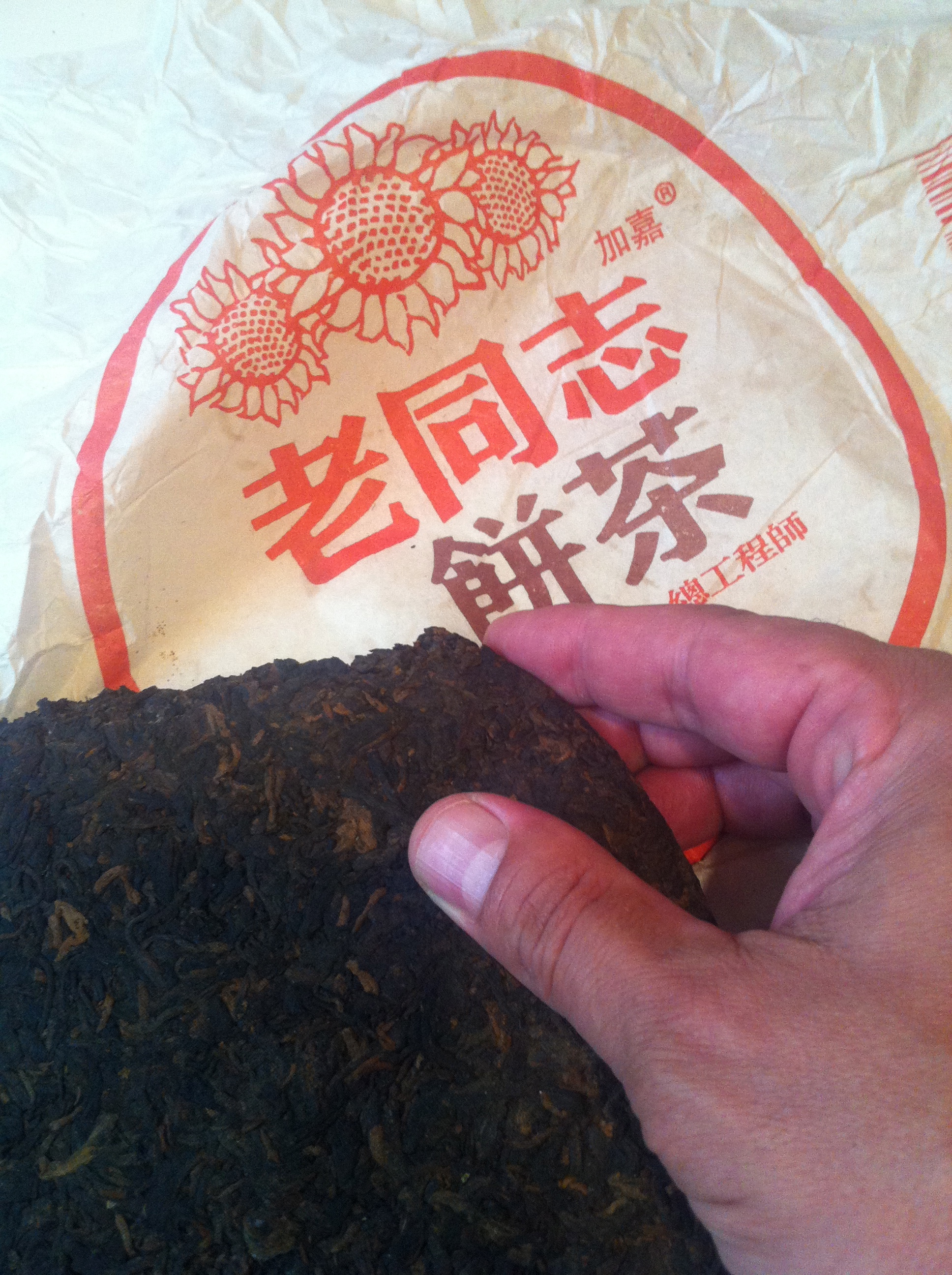
A few Shanghai trips ago I was given a large, ornate, flat box as I was preparing to leave for my flight to Los Angeles. I asked what it was, and was told it was good oolong tea. I didn’t know how good until, while jettisoning the box so the tea could fit in my luggage, I noticed the Chinese woman behind me to check in at the airport was staring at me. I was beginning to wonder if pitching the decorative box was bad form when she asked me if I knew what I had. I replied that it was oolong tea, and she smiled and explained that the labeled paper the wrapped the hard disk indicated it was one of the most treasured and expensive brands in China. For a moment I thought to ask her if she wanted a chunk, but you know how it is when some bauble you’ve paid scant attention to suddenly reveals its true worth.
It’s an ancient and relaxing ceremony. Steaming hot water, and a small porcelain teapot the color of a green apple, with matching handleless cups. Fold back the paper from the cured tea and break off a small clump of the mummified leaves with your fingers. Roll the tea in your fingers, feeling the slight oiliness, and let it fall loose into the teapot, black against the white porcelain inside. The strainer molded into the spout will catch most of the tea, but not all, and that is alright. Pour hot water over the tea, replace the lid, and cover the pot with a clean dish towel for a few minutes while the oolong tea steeps.
The color of the tea is like that of milk chocolate, and the initial aroma to me has a hint of the sea, reminiscent of the ocean port that is Shanghai. The flavor is assertive, but not strong, and it is very smooth. It tastes best very hot, so frequent micro sips seem to be the best way to enjoy a cup. I prefer it most after dinner, and while I’ve always assumed oolong tea has caffeine, it doesn’t keep me up. Rather, I find it to be one of the more effective digestifs after a well cooked and robustly consumed meal.
 berowne.com
Leave a comment