Archive for the Books Category

Denver

Posted in Books, Food, Music, Travel with tags , , , , , , on January 28, 2013 by David McInerny

IMG_2692I have always enjoyed traveling to Denver. It’s a friendly, big town with major league sports, great beer, astonishingly good sushi, a fantastic music scene, and an outdoorsman’s Mecca. While driving to my first meeting today, I started listing the reasons why I love Denver so much:

  • The Rockies have the most well thought-out, family-friendly stadium in baseball.  
  • Denver is the best launching spot for world class fly-fishing, camping, and hiking.
  • The Stanley Pappas Cigar Lounge, and Cigars on 6th both welcome new customers.
  • The downtown area has expertly eschewed food chains, and has a fine collection of privately owned restaurants and brew pubs.
  • I’ve been a Deadhead in Denver more than any other city on the globe.
  • Tattered Cover Books is a must for the avid reader.
  • Twist and Shout is the go-to spot for hard-to-find music – be prepared to spend at least an hour.
  • There’s something sublime about waking up to a view of the mountains.


Kansas City – World War I Museum

Posted in Books, Food, Travel with tags , , , , , , , , on January 27, 2013 by David McInerny

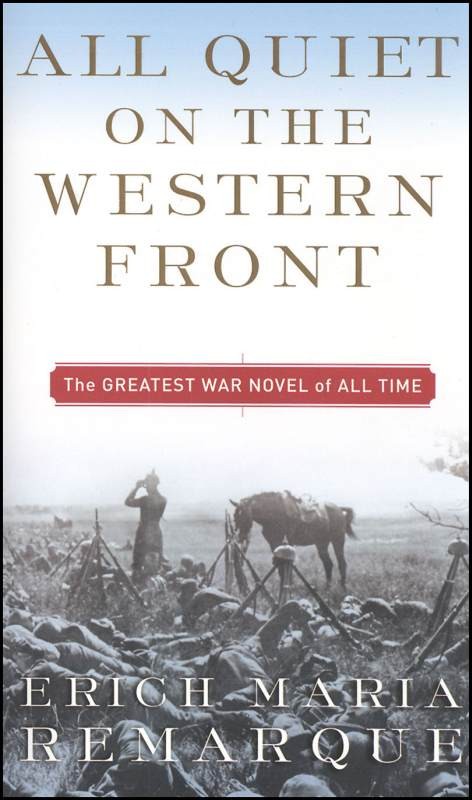
all_quiet_on_the_western_frontWhile I’m not a student of the two world wars, that is not the case with the remainder of my book club. So it was no surprise that our last book assignment was All Quiet on the Western Front, by Erich Maria Remarque. I was rather keen to tuck the book under my belt, actually, as I had never read it, although my children had all read it in high school. Also, it’s good to attack the classics whenever possible and, after all, the front cover of the book assured me that it is “the greatest war book of all time.”

Mike N., a recent addition to our club, had a marvelous idea when he chose the book. He suggested that after we had finished the novel, we would all meet at the National World War I Museum in Kansas City (another first for me), and after a tour we would have our book discussion at the finest Austrian-German restaurant in town, The Grunauer. No arm twisting was needed.

All Quiet on the Western Front is a gripping, fast read – a no-holds-barred look at the literal trenches of modern warfare as it was tossed upon the unsuspecting rural youths of early twentieth century Germany. In it, high school classmates are urged to join the war with promises of honor in battle and adulation at home. What they encounter instead is years in wet, vermin infected trenches, with no hope of glory and little chance of survival. They fight, because not to fight is to perish, yet convinced that even if they are still alive at the armistice, both they and the world will be unrecognizable and potentially irreconcilable. The story of the fighting unit is fast paced, and even the frequent pages of ruminating by Paul Baumer, the soldier-narrator, do not detract from the fascination of the tale. It holds a well-earned spot on the shelves of classic fiction.

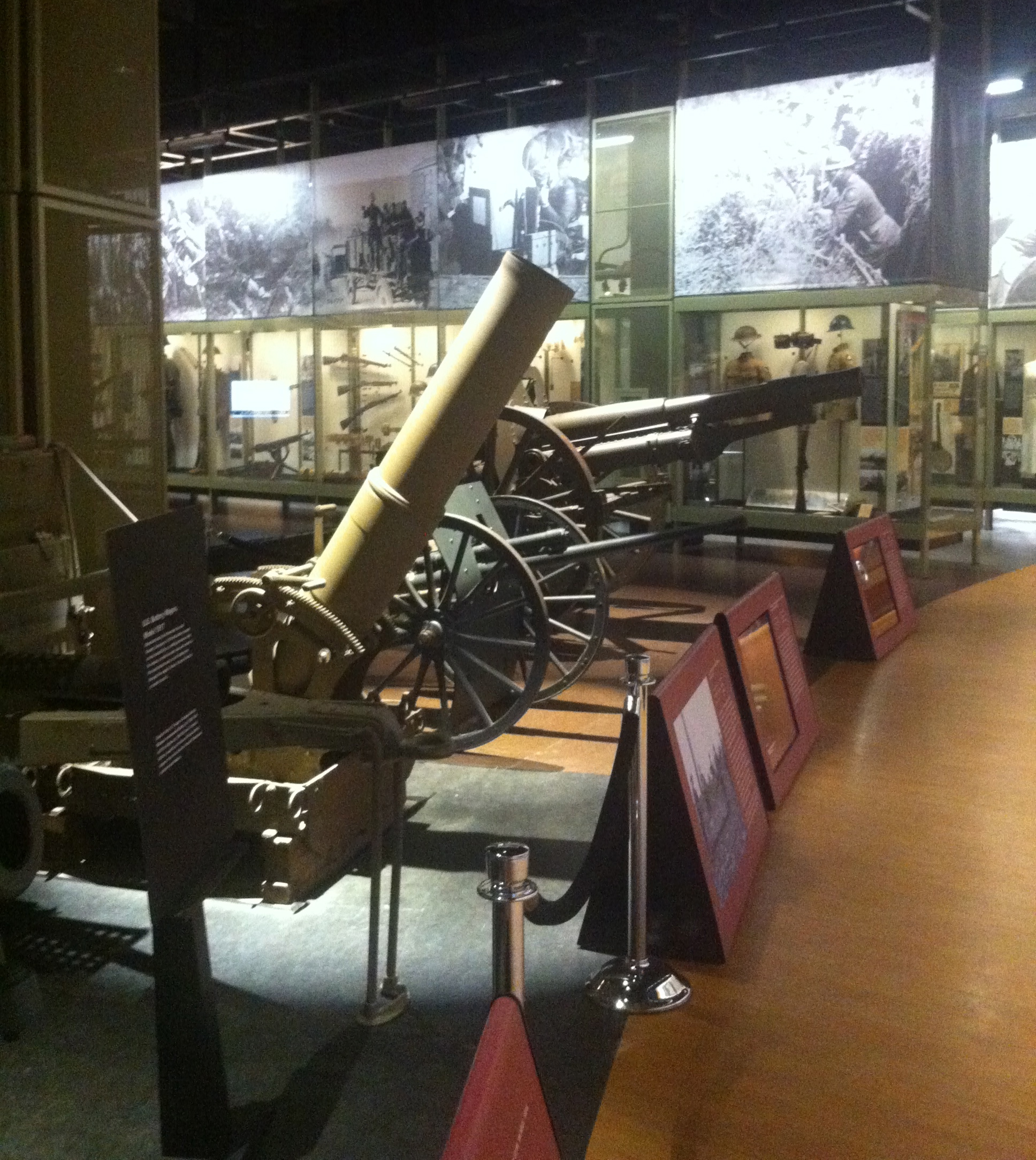
The WWI Museum is located just south of downtown Kansas City proper, and it is worth a few hours if you are in town for a ball game or barbecue. It is constructed in a circular fashion, which one enters after an excellent and essential ten-minute introductory film if, like me, you are fairly oblivious to the why’s and where’s of the “war to end all wars.”  A chronology is depicted graphically on the inner part of the circular hall, while the outer wall has displays of small arms, actual mortars and cannon, the numerous technologies of modern warfare, the types of trenches used during battle by the European countries, and several excellent short films that tie together the various war theaters across the globe.

The Grunauer was an excellent choice to get off our feet and enjoy some hearty German fare as we discussed the museum and the book. The Grunauer has an impressive choice of German and Austrian bars on tap, and is known for its array of both brats and schnitzels. Just a few minutes from the museum, its an easy and welcome add-on to a day of European history. They also offer an authentic German coffee service, featuring delicious Melitta coffee. As one who has spent a fair amount of time in German bierhalle, the Grunauer is genuine as your going to find in mid-America.
IMG_2689

IMG_2686Fat_City_Grunauer_interior

William Shakespeare – Richard III

Posted in Books with tags , , , , on December 17, 2012 by David McInerny

IMG_2567Richard III is the first of Shakespeare’s histories that I’ve read (I thought it might be a good idea to begin to round out my experience beyond the comedies and tragedies, since I named this blog after a Shakespearean character), and I found the literary development of Richard a departure from almost every villain of any stature the great bard depicted. Granted, there was history to be followed, and the play was meant to be easy enough to follow in describing fairly recent English history to the masses, but Shakespeare had ample opportunity to infuse the flaws of Richard with the same tragic light as King Lear, or with the ultimate contrition and longing for redemption as Macbeth. Yet, there is none of that.

Richard knows who he is, knows what he wants, and attains it relentlessly. He is the ultimate poster boy for unrepentant ambition, and anyone in the play that even appears to stand in his way (and there are plenty) gets murdered be him or his close allies. And just to make sure there’s no double-crossing afoot, Richard knocks off the allies as well for good measure. Mothers, brothers, children, wives – no matter, they’ve got to go if they are an obstacle to the throne. Richard really wants to be the King of England.

The play describes the culmination of the War of the Roses, a royal “Hatfield’s vs. the McCoy’s” adventure between two English houses, that of Lancaster (symbolized by a red rose), and York (a white rose). Richard was from the house of York and, after assuming the throne, was defeated by Henry, Earl of Richmond (of the Lancaster line) who then became king and married Elizabeth of York to unite the families. With much bloodshed along the way.

After finishing the play, I did an internet search for connections between Machiavelli’s The Prince and Richard III. As I suspected, the comparisons are abundant. Richard’s ruthlessness is, of course, his undoing, since he goes to battle with conscripts and mercenaries, and all who could support him have no reason to , and wisely abandon him. In the battle he is knocked from his horse, leaving him exposed to the will of Richmond and his all too predictable fate. “A horse, a horse, my kingdom for a horse!”

Buried in the Sky – Peter Zuckerman and Amanda Padoan

Posted in Books with tags , , , , on November 4, 2012 by David McInerny

 The apt subtitle to this new book is THE EXTRAORDINARY STORY OF THE SHERPA CLIMBERS ON K2’S DEADLIEST DAY. This is a great page turner, and it has been reviewed exhaustively since it’s release this past Spring, so allow me a few bullet points of impressions as I finished the book yesterday:

  • I’m glad the book concentrates on the local expert climbers, the Pakistanis and ethnic Napalese that do the real heavy lifting (literally) during mountain ascents, and not the sponsored Western attention-getters that follow trails broken for them by locals, but are the first to step in front of a camera at the summit.
  • The sport changes micro-economies in the Himalayas. The unsustainable popularity of climbing the same mountain over and over pours tens of thousands of dollars per climb into the hands of a few locals, thus luring even more young men away from farming and into cities with no jobs other than carrying loads up mountains.
  • While the authors spent significant time and money researching on-site, and developing the lives and stories of the sherpas and their families, the reader is still absorbing background about millennium-old war lords and local myths 120 pages into a 235 page book.
  • The last point notwithstanding, the last 100 pages of the book are riveting. It’s worth the wait, and describes a level of courage and endurance in the first days of August, 2008 that uplifts humanity in the midst of tragedy.


Giorgio Vasari – Lives of the Artists

Posted in Books with tags , , , , , , , , , , on October 13, 2012 by David McInerny

Anyone who has even a meager appreciation for the creative enormity that was the Italian High Renaissance owes a debt of gratitude to Giorgio Vasari (1511 – 1574). Much like the Romano-Jewish Josephus, whose contemporary writings of the rise of Christianity in the Roman Empire of the 1st century corroborate and enhance much of the writings that emerged from within the early Church, Vasari was both an artist and contemporary of many of the Italian artists he describes in his three volume work. He is largely responsible for our knowledge of the early training, temperaments, artistic approach, technique and lingering legends of the great painters and sculptors of the 15th and 16th centuries.

Much has been written about how and why so much artistic talent erupted virtually at the same time in one small area of the world. I think it is almost as fascinating to consider that there was a contemporary individual who a), recognized that his was an extraordinary time, b) researched  and documented what he witnessed for posterity (historians were nothing new in the Renaissance, but remember Vasari was writing about the present and very recent past), c) was an artist himself, and as such was in an amazing position to assess the talent around him, and d) a collector of the works of his fellow artists, suggesting a certain humility and objectivity in this era of epic egos. Could any better person have been chosen to record the lives and works of creative giants like Michelangelo, Titian, Donatello, Botticelli, Giotto, Raphael, Brunelleschi and Leonardo da Vinci?

Vasari published the initial printing of the Lives in 1550 (dedicated to Cosimo de’ Medici), and it was an instant best seller, spurring a second edition in 1568. Needless to say, it has gone through countless editions since, but I prefer George Bull’s 1993 translation published by the The Folio Society, in part because the artists lives are presented in chronological order, and the reproductions of the paintings are of very high quality.

Even a cursory look at the contents of the three volumes indicates that Vasari revered some artists more than others, if quantity of words and effusive praise count for much. Michelangelo, the great painter, sculptor and architect, receives Vasari’s highest respect with 120 pages (by the Folio Society edition), and it would take a tough critic to contradict his assessment. By why, by comparison, would Sandro Botticelli warrant a mere 8 pages, and the prolific genius Leonardo da Vinci barely 20 pages? Certainly Michelangelo’s bombastic character and tempestuous relationship with Pope Julius II made for good writing, and Vasari’s own life overlapped most closely with Michelangelo’s, but one can’t help but wonder how closely our idea of who were the “rock stars” of the Renaissance match the ideas of those who lived among them. In the end I’m nit-picking, of course, because without this invaluable work our understanding of the motivations and passions of the iconic artists of the 16th century would be lacking indeed. Vasari is a very good and interesting writer, and I would recommend his Lives of the Artists for any student of the shining creative lights of the High Italian Renaissance.

P.G. Wodehouse – The Golf Omnibus

Posted in Books with tags , , , , , , , , on September 26, 2012 by David McInerny

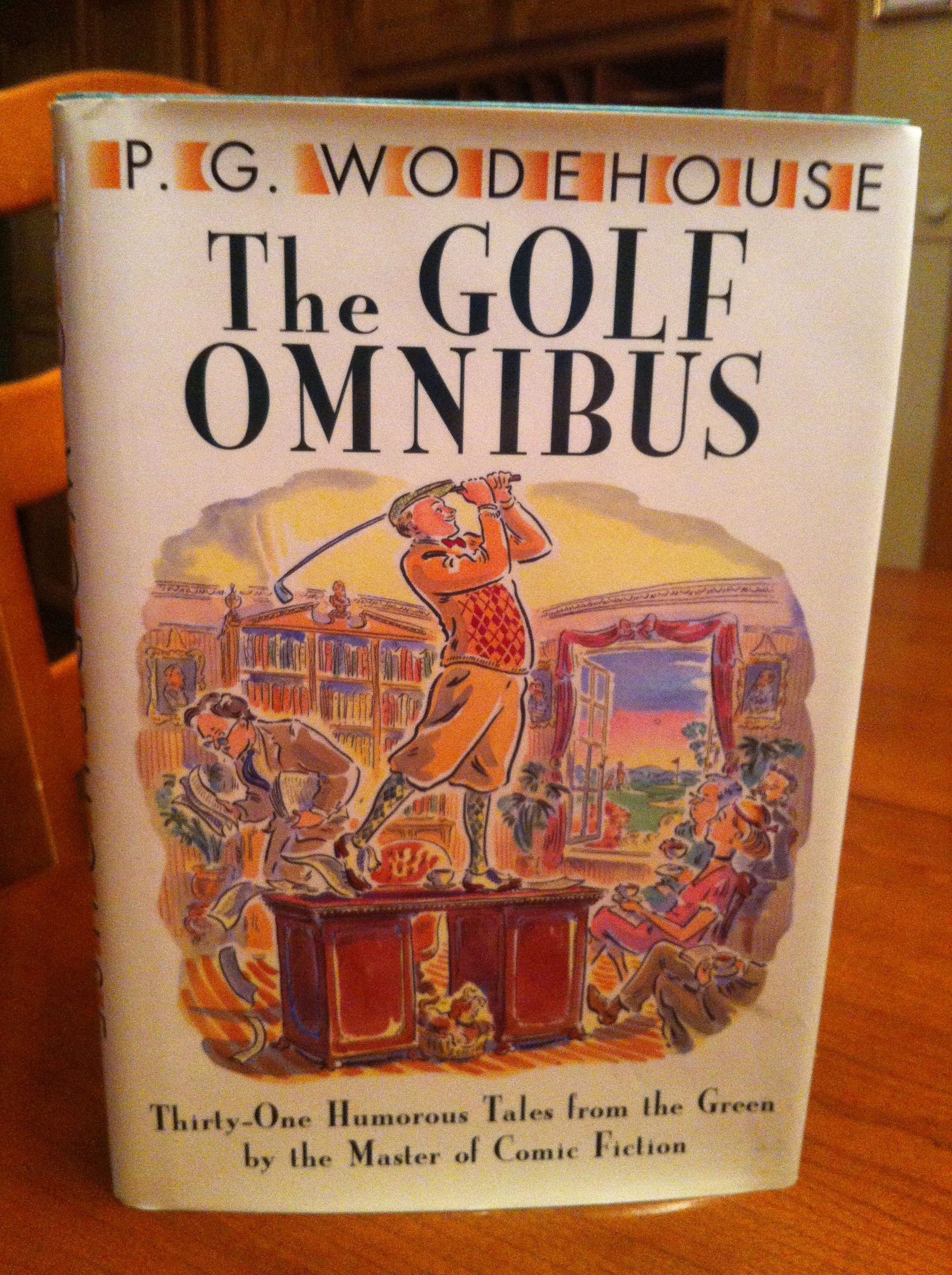
On the eve of the Ryder Cup, the emerging chaos of which I’ve just flown out of in Chicago, I’d like to recommend some between-match reading – The Golf Omnibus, by P.G. Wodehouse (pronounced woodhouse). Wodehouse was an uncommon talent in creating hysterical stories between a score of brilliantly conceived recurring characters, all set within – as my father described it – a late Victorian era that never really existed. Crumbling manors kept standing by the iron will of stately, if not somewhat dusty, elephantine dowagers, trembling servants, and scheming match-makers roam the pages from Wodehouse’s fertile, comic brain. The epitome of his creations are, of course, Bertie Wooster and his man-servant Jeeves, headliners in a series of books as well as the acclaimed PBS series featuring Stephen Fry as Jeeves, the gentleman’s gentleman, and Hugh Laurie as Bertie Wooster (and, yes, more recently as House, M.D.).

However, for quick and clever belly laughs, Wodehouse’s golf stories are unequaled. Often set in the fictitious golf club at Wood Hills, under the watchful eye and wagging tongue of the Oldest Member, the witless are hooked, romances get shanked, and outrageous plots are driven straight into the rough. A fading, Victorian sense of propriety governs the proceedings, making the unlikely story lines even more uproarious. The shining example of Wodehouse’s brilliance on the links is The Clicking of Cuthbert, essential reading for anyone that has harbored illusions of golf greatness, or suffered the crime of unrequited love. Meaning all of us.

All these stories are collected in The Golf Omnibus, a timeless tome that would also make a great stocking stuffer for the aspiring golfer in your life. While you’re at it, order the complete Jeeves videos as well. The Wodehouse estate will thank you.

“I was never much of a golfer. Except for that glorious day at Aiken I was always one of the dregs, the sort of man whose tee shots, designed to go due north, invariably went nor-nor-east or in a westerly direction. But how I loved the game.”

– –  P.G. Wodehouse (aged 92), in the preface of The Golf Omnibus

Booking in St. Charles

Posted in Books, Travel with tags , , , , on September 26, 2012 by David McInerny

The Fox Valley in Illinois has a cluster of charming villages, exemplified by the historic triumvirate of Batavia, Geneva, and St. Charles. I was in search of a decent cup of coffee when I turned a corner in downtown St. Charles and found not only the coffee, but attached to the cafe was also a small independent book store. An over-caffienated bookworm’s dream.

Book shops such as these invariably take on the character of the owner, and Town House Books and Cafe, on 2nd and Cedar streets, is no exception. The offerings were heavily weighted toward local history, travel, and outdoor activities. Among a few new volumes of travel writing, I picked up Paul Shullery’s 1996 story of fly-fishing obsession in England, Shupton’s Fancy (1st ed). It’s a short read, and perfect for my upcoming fishing trip to read in the tent before the lamp goes out at night.

Looking into the cafe, I was tempted to take an early lunch and flip through the new purchases, but I realized that I would be the only male in the room. Clearly, I would be interrupting a local women’s book club, so I decided to look for another spot to eat further along the Fox River, but the Town House coffee was great.

http://www.townhousebooks.com

Making Amends to the Bard

Posted in Books with tags , , , , , on September 21, 2012 by David McInerny

When a man realizes that there are only so many days left in his life to make happen the hopes and dreams for which there was so much time in his salad days, it’s time to look honestly inside himself, admit his shortcomings, and make amends. So you can imagine my chagrin, not to mention embarrassment, when I made a list of the Shakespeare plays I still needed to read and was forced to come to grips with the fact that I’ve only read 12 of the 41 recognized plays (assuming you agree with the recent addition of Double Falsehood into the oeuvre, which I do). Only twelve plays? I haven’t read Othello? On the bright side, there are still 29 Shakespeare plays yet to discover and enjoy, and I’m tackling the “histories,” starting with Richard III.

I recommend the paperback versions of the plays from the Folger library. Each play has an introduction that puts the drama in context of Shakespeare’s life and work, describes the importance of the play, and notes famous lines that have become entrenched into the English vernacular. Most useful are the running explanations and “translations” of bits of arcane English which allow the reader to keep the narrative flow.

After reading Julius Caesar in high school, I gave Shakespeare scant attention until, while killing an afternoon in Los Angeles’ Huntington Library before an evening flight to Asia, I saw a First Folio for the first time – the first edition of Shakespeare’s collected works, published in 1623. Only a little over 200 copies are still known to exist. (A great new book by Eric Rasmussen, The Shakespeare Thefts, tells the stories of how some of these copies have made their way, legitimately and otherwise, through galleries, book collections and attics around the globe.) The Huntington visit spurred me to pick up the plays and read, and the comedies have been my favorite. Clearly, I need to pick up the pace.

My dream is to own a quarto, one of the early publications of the plays that were printed on paper folded twice (into fourths, giving the format its name) before printing. It’s likely to remain a dream, as even these volumes, created originally as affordable copies of the plays, run into the stratosphere at auction today. Nonetheless, there’s room for a quarto of Love’s Labour’s Lost on my book shelf, the play that features one of my favorite Shakespearean characters, Berowne.

Sunday Simplicity

Posted in Books, Food with tags , , , on September 9, 2012 by David McInerny

Some of the best times can’t be planned as we all know, and since planning requires by definition that something actually transpires, my afternoon wouldn’t have qualified in any case. I had a great time doing almost nothing at all, and yet was still keenly aware of the glory that is leisure time.

A few days ago I walked the 4-mile round trip to the public library, and was delighted to find a new book by John Gierach, the phenomenal guru of the philosophy of fly-fishing, or possibly the guru of a philosophy of life contemplated while fly-fishing. He’s an extremely gifted writer, and I walked home holding the fresh volume, No Shortage of Good Days, with an anticipatory grin.

Today was a complete and utter break from a summer of heat and drought, and there was a cool breeze even while in the sun. The deck was inviting, and I opened the big, red umbrella with the intent of putting my feet up and reading. I clipped and lit an Oliva G-series cameroon cigar, a brand that my neighbor Dave introduced me to last year as a birthday gift, and if he’s reading, I’ll make clear that a few of those would be welcome this year as well.

Another treat to get me through the afternoon was a six-pack of San Pellegrino limonata, a favorite lunchtime beverage from my elementary school days in Rome. I’m certain I hadn’t enjoyed one since those halcyon days in the old country,  a day much like the one I was embedded in this afternoon. I read, puffed and sipped in peace without even the sound of a mower on the street, and before I knew it I had moved through the book so quickly that I forced myself to close it and save some for my business trip this week. After all, the first Sunday of pro football was waiting for me inside. I really enjoy having a day with no plans.

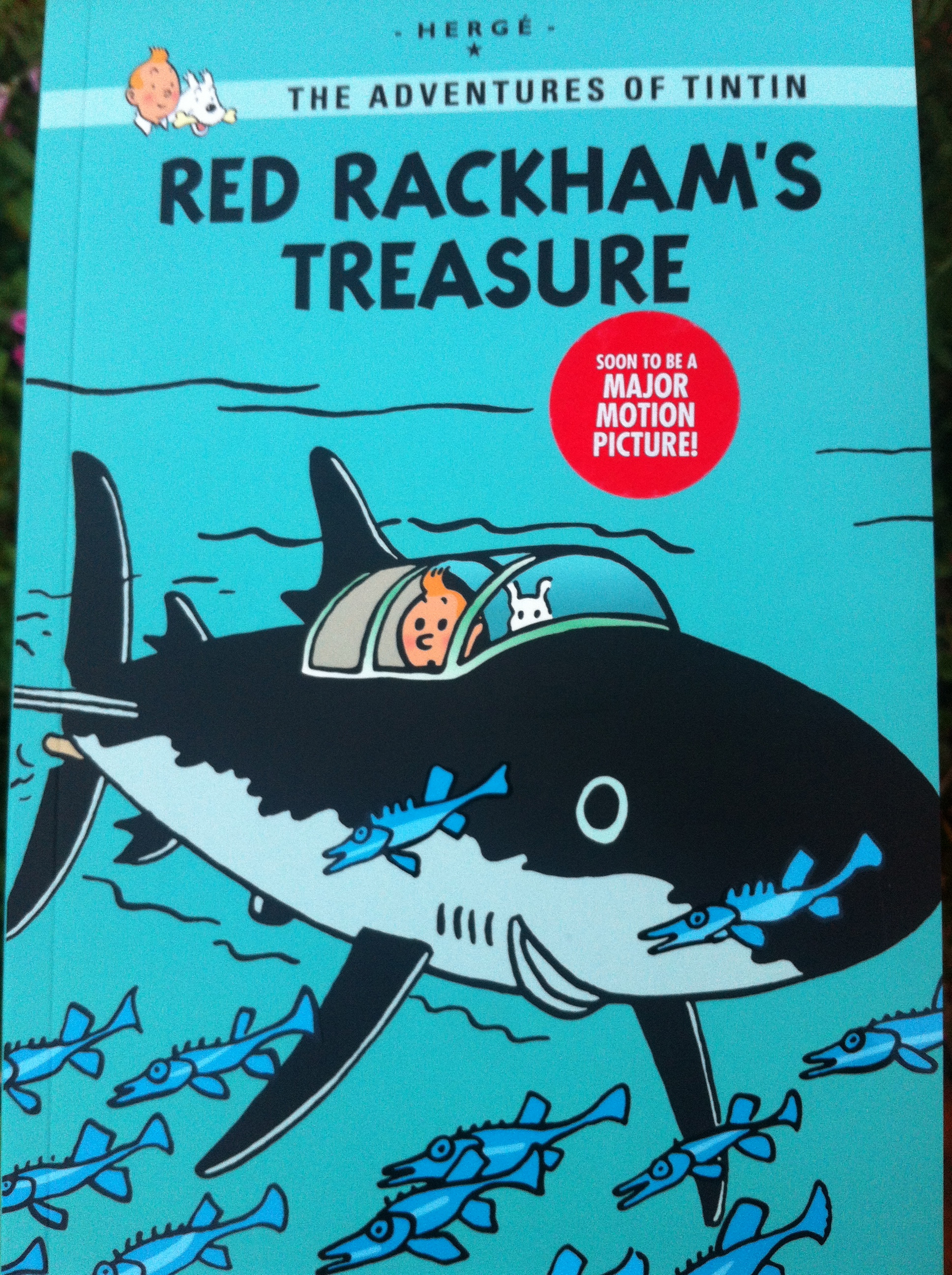
Herge – The Adventures of Tintin

Posted in Books, Travel with tags , , , , , , , on September 5, 2012 by David McInerny

I lived in Rome during the 1969-1970 school year, attending 3rd grade at the Marymount International School. On Sundays my dad would drive us to Santa Susanna’s, which had an English Mass as well as a continental breakfast afterward in an English lending library. It was in the library, while painting my face and dress shirt with jelly doughnuts, that I discovered the Adventures of Tintin.

There are 24 stories written and drawn by Herge (Georges Remi) between 1929 and 1976, which send the boy reporter Tintin and his dog Snowy all over the globe and beyond chasing mysteries and criminal spies. He was a fearless and intrepid youngster, often calling upon his adult friends, Captain Haddock and Professor Calculus, to assist in unraveling sinister plots threatening good citizens everywhere. My favorite adventure was, and is, Destination Moon, which dovetailed with my thrill of watching Neil Armstrong step on the moon on black and white TV just months before. The books were portfolio sized to exhibit Herge’s colorful and talented artwork.

Herge’s stories, while simply boys’ adventures, still ran into censorship over the years: first by the Nazi’s who occupied Herge’s native Belgium, and watched him closely to make sure his villains didn’t represent the Gestapo too closely, and later by the police of political correctness that bristled at his caricatures of other ethnic peoples (as if Herge was to step out of the norms of his time and anticipate the sensibilities of the late 20th century), though no bigotry existed in his story lines.

Both of these factors have faded away, and a new motion picture has introduced Tintin to an American audience. Even better, Herge’s publisher, Little, Brown and Company, has released a new edition of the adventures, which I’m enjoying reading all over again, four decades hence.