Archive for the Food Category

Art at Newfields

Posted in Family, Food, Travel on January 23, 2021 by David McInerny

The Missus, a painter in acrylics, was looking for inspiration. So today we decided to visit the Indianapolis Museum of Art, called Newfields, north of downtown. A sprawling campus of activity normally, we were concerned about social distancing, so we checked their precautions online. Reservations only, limited entries each hour, masks required. Looked good. When we arrived it was clear the museum was enforcing their policies politely and well. There was never more than one other couple in a room, and it felt like we were enjoying a private viewing.

Two floors of art were open, with a third to open after renovation this summer. We concentrated on European and American late 19th/early 20th century painting. Newfields’ collection of Impressionist art is very solid, representing both sides of the Atlantic, with wonderful descriptions of each piece and how one is related to the other, and how artists interacted with each other during that explosive epoch of creativity. Maps representing where artists lived and where their inspirations are located were a welcome touch.

The Missus was particularly delighted with the extensive collection of painting from the Pointillism school of Impressionism, a technique where the painter creates images using just the point of the brush, or pixels of color, using modern display terminology. Georges Seurat and Paul Signac, and their students and followers, made for a collection as large as any the Missus or me have seen in all our world travels.

Our eyes sated, but our stomachs empty, we were glad to see the cafe was spacious and safe. Tables were marked clean or needing to be cleaned, so we settled down with the daily special, beef rib paninis with mushrooms, brie cheese and pesto. After our lunch, we wandered the gift shop and decided that we will become members of Newfields. We look forward to the day we can see the entire campus without masks and with a large group of friends!

Factoid: the famous LOVE symbol in the photo was designed by Indiana’s own Robert (Clark) Indiana in 1965 for the Museums of Art Christmas card. He created the sculpture in Newfields lobby in 1970.

#newfields #indianapolismuseumofart #ima #frenchimpressionism #pointillism #robertindiana #love

Rack of Lamb

Posted in Food on January 17, 2021 by David McInerny

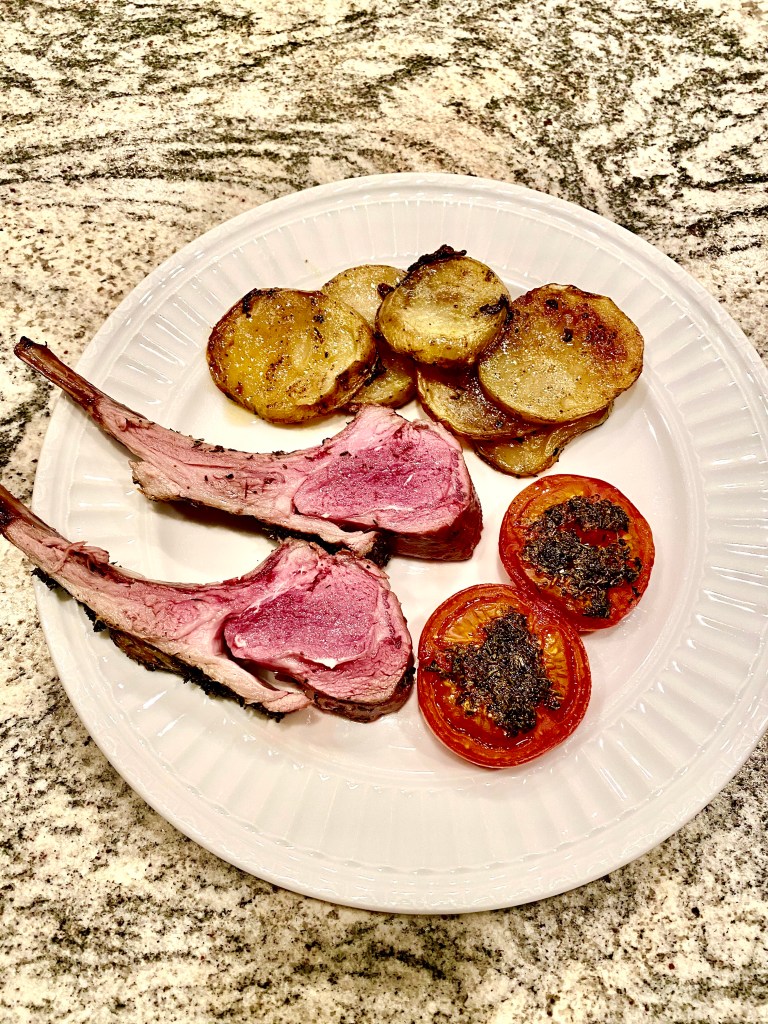
When I was in cooking school, I was taught to prep a rack of lamb French style. Now, you can buy an Australian rack cut with the ribs prepped. The “cap “ still remains. As seen, trim that rectangle off. It’s more fat than you need.

Make a mixture of dried herbs, thyme, oregano, basil and olive oil. Spread the paste over the lamb. In a cast iron skillet, making it a one pan wonder, brown potato slices and onion or shallots in butter until they begin to brown. Add enough water to cover the bottom of the pan.

Place the rack on top of the potatoes into a 425 degree oven and cook for 25 minutes or until the meat reaches 135 degrees. It’s really that easy.

#cooking #lamb #castiron

Japanese Dreams

Posted in Family, Food, Travel with tags , , , , on October 31, 2015 by David McInerny

IMG_5284

Up until last week, Tokyo for me had been a quick fly-in from Taiwan, a rush to Sony headquarters, and verbal sparring over the cost of GPS components with some of the best negotiators I’ve ever encountered. It was while negotiating in Japan that I learned the value of the application of a long, awkward silence. Unfortunately, I saw precious little of that beautiful country.

This Tokyo trip was minus dark suits and plus one complete family, and there were no long periods of silence. Somehow five adults – two parents and three adult children – managed to manipulate schedules and budgets in order to orchestrate what may be the final overseas trip for a family that committed itself to seeing the world with a first venture to Amsterdam in 2001. Later there was Rome, Munich, Paris, Nice, Zurich, Valencia, Arles, Cancun, Salzburg…and now Tokyo. This journey had a sense of nostalgia to it before we climbed onto the plane for the long haul from Los Angeles.

IMG_5244

Fourteen years ago the agendas were whatever I made them, and my “ducks,” as I’ve always referred to my family on the road, followed behind. This trip I turned the planning over to the ducks, mostly so I could observe my children as adults and watch their choices and their manner of choosing, and enjoy them navigating a foreign country as my parents had taught me in the 1970’s.

Those who have read my column are aware of my senseless fear of urban metro systems, so my delight in watching my trio dive into the task of zipping around underneath Tokyo was unlimited. They never put us on a wrong train, and we never missed a stop. The kids also arranged a dinner in the the legendarily weird and risqué Ripponghi District. It was a first for us to have dinner next to a club named The Ten Sluts, but the view of the street from a second floor balcony made for first-class people watching, and the fried tuna cheeks were excellent!

IMG_0089

In fact, the dining was as good as we all hoped. My wife and daughter got their fill of uncooked seafood, battered seafood, and fruits and vegetables I’d never seen or eaten before. However, it was after a long night of souvenir shopping along the Cat Walk that we had a late dinner and my favorite – incredibly authentic Italian cooked while we watched the chef. The boys needed a day trip to Kobe for the legendary steaks – sold by the gram! This had me double checking the budget while the boys poured over the menu.

IMG_5290IMG_5274

As with all travel, for me, the best part is simply being there. Whether it’s tea on the Ginza or coffee in a maze of streets surrounding a temple, it seems that going halfway across the globe is the easiest way to strip away all the unnecessary parts of me so that I can view the world with fewer filters. Doing it with the family has always been another notch up into the otherworldly.

IMG_5211 IMG_5217 IMG_5229

Take Five Coffee + Bar

Posted in Food, Music, Travel with tags , , , , , on May 7, 2015 by David McInerny

IMG_4732

The Huntertones, 5/7/15

Overland Park, Kansas is giving the KC jazz music scene a welcome addition with the advent of the Take Five Coffee + Bar. Named after Dave Brubeck’s 5/4 time-signatured classic, Take Five is already gaining a reputation of hosting the better local bands, as well as bringing in acts from the coasts. This week alone boasts the Brooklyn band Huntertones (formerly the Dan White sextet) as well as Kansas City’s own phenom Steve Lambert. Cover charges typically range from gratis to $10, with a jazz brunch on Sundays.

Not only will Take Five quickly join the ranks of classic KC venues as the Green Lady, Majestic, and Phoenix with its fantastic acoustics and comfortable atmosphere, but it also has a full bar with its complete coffee and tea selections. The food menu is extensive and fairly priced, making this a not-for-long hidden gem for jazz lovers and foodies alike.

Take Five, being minutes from my home, has already become a regular haunt for me. I love the quality art on the walls depicting Miles, Billie, Dave and Charlie. I love that the baristas don’t panic when I request four shots in my latte. I love that the owners step out from behind the bar and frequently swing with the music. Give Take Five a visit and let them know their project is welcome here in Overland Park!
Loving The Aubergine

Posted in Food with tags , , , , on April 27, 2015 by David McInerny

aubergineIn the last few years, I’ve grown to enjoy eggplant. One reason is I finally read about a critical preparation step – “sweating” the eggplant. The liquid in this vegetable is very bitter, so it’s essential to remove it. This is done by slicing two eggplants into 1/2″ discs and arranging them flat on paper towels after sprinkling with sea salt. After thirty minutes, flip them and continue to sweat them. That’s a lot of liquid, and now you’ll have tasty aubergine.

Although my typical recipe is eggplant parmesan (see my post of October 10, 2013), this weekend I decided to try Greek moussaka. After sweating, coat in olive oil and bake the slices on a cookie sheet at 425 degrees, 10 minutes on each side. Let cool. Dice an onion, three carrots, three stalks of celery, a half dozen button mushroom, some fresh garlic and two tomatoes. Sauté the vegetable dices in oil until tender, 10 minutes, and then add the mushroom, garlic and tomatoes. Sauté another ten minutes. Remove from heat.

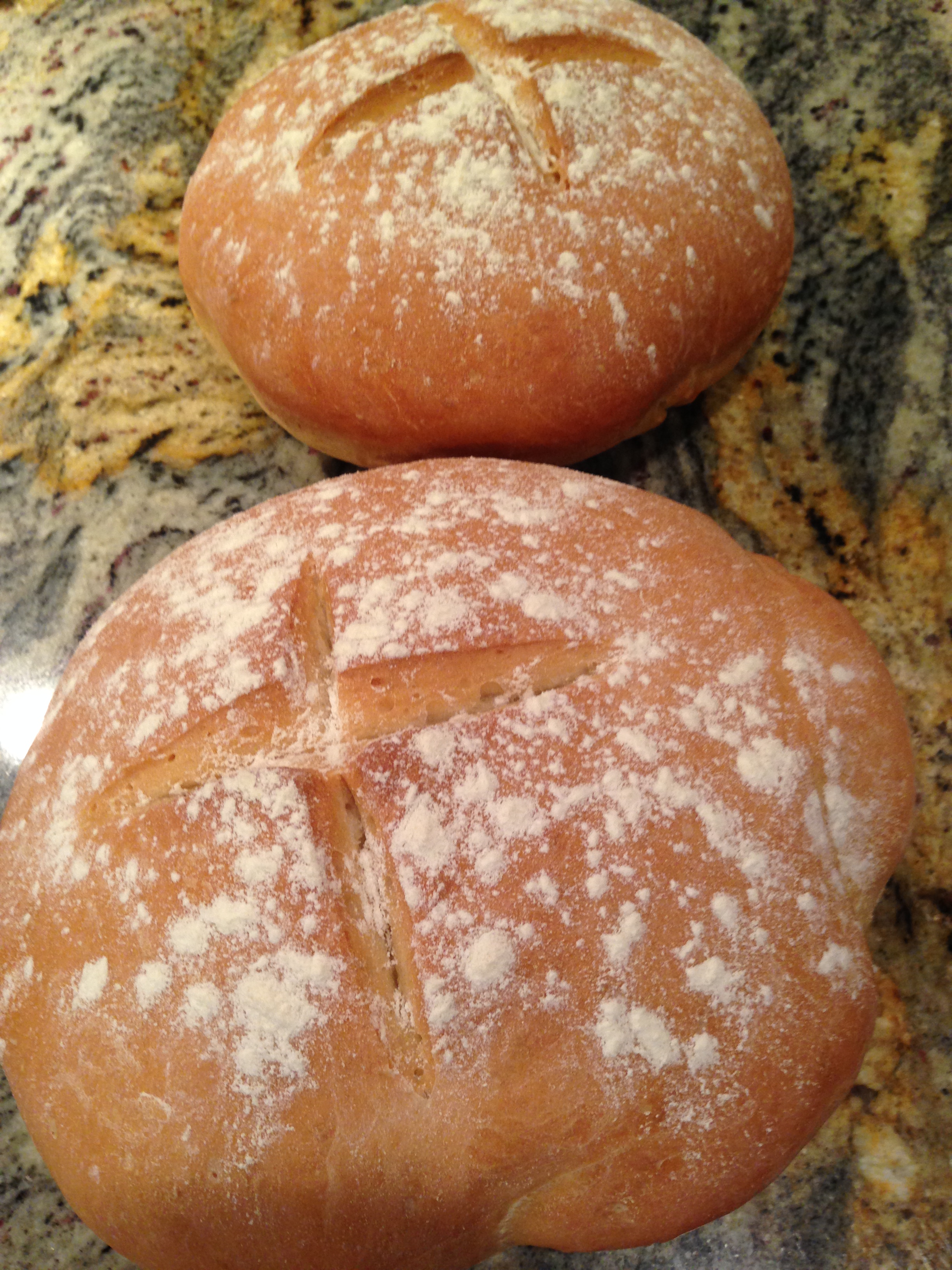
Whisk together one cup of whole milk, 4 egg yolks, a quarter cup grated parmesan, a tablespoon of flour, one teaspoon cinnamon, one tablespoon dried oregano, salt and pepper. Pour over the sautéed vegetables and mix. Oil a small casserole dish. Place a layer of eggplant slices in the dish, pour over half the veggie mix, and repeat the process. Top with a half cup of grated parmesan, and bake at 350 degrees uncovered for 45-50 minutes, until the cheese is golden brown. I served the moussaka warm with scallops in brown butter sauce and home-made crusty bread.

IMG_4685 IMG_4686


Mouscron to Bruxelles

Posted in Food, Travel with tags , , , , , , , , on January 25, 2015 by David McInerny

IMG_4540

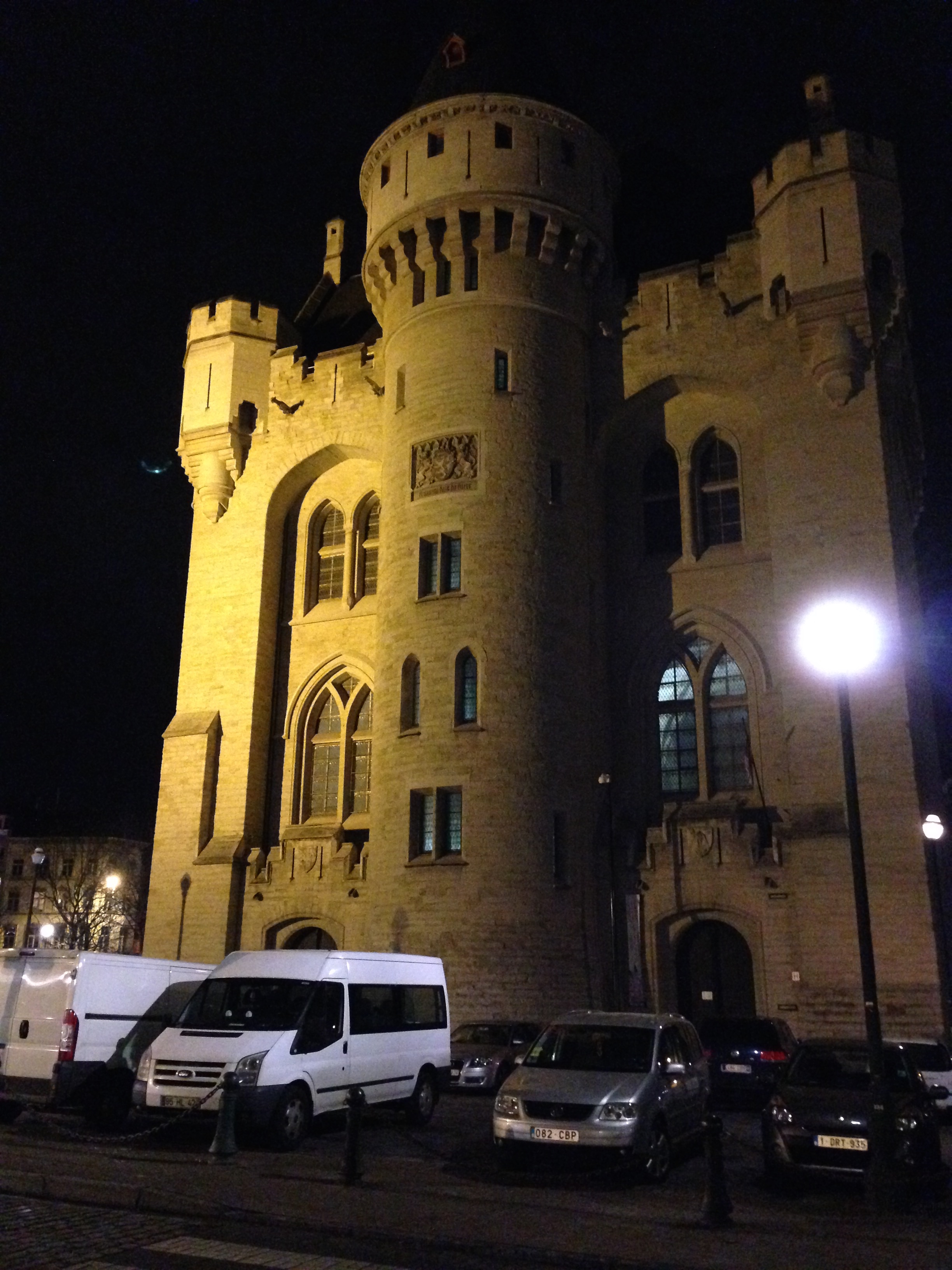
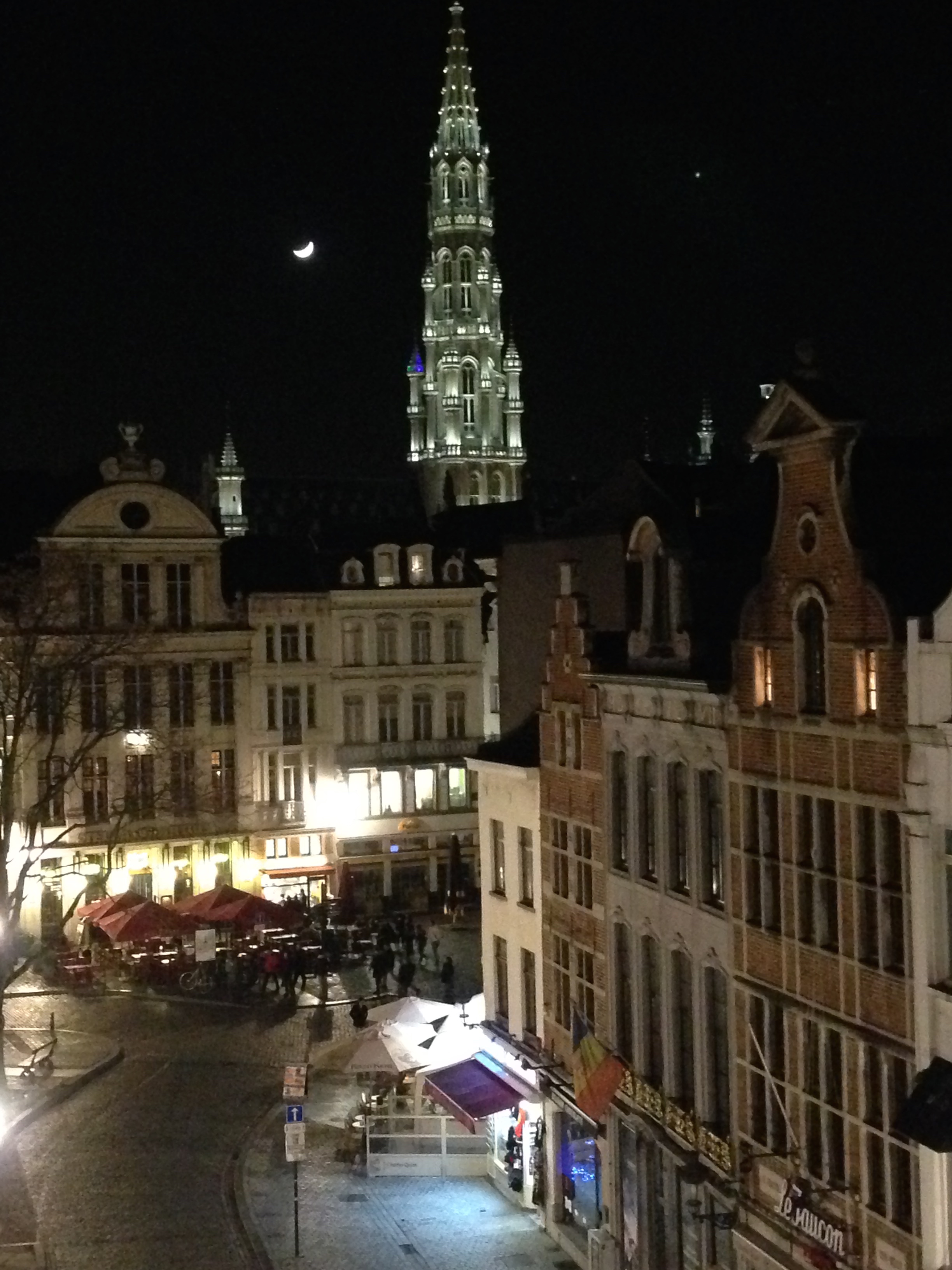
Early in the morning I checked out of my hotel in Mouscron, a village in the south of Belgium across the border from Lilles, France and made my way to Brussels. Once hailed as the business center of Europe, most of us know Brussels now as the center of chocolate and beer. This charming jewel in the center of what was Flanders still has much of which to be proud. I entered through a tastefully efficient and clean train station and immediately stepped into a wide ranging museum district. A small hill opens onto the Grand Place, a Baroque city center of boutique hotels, small shops and dizzying array of small, bustling restaurants.

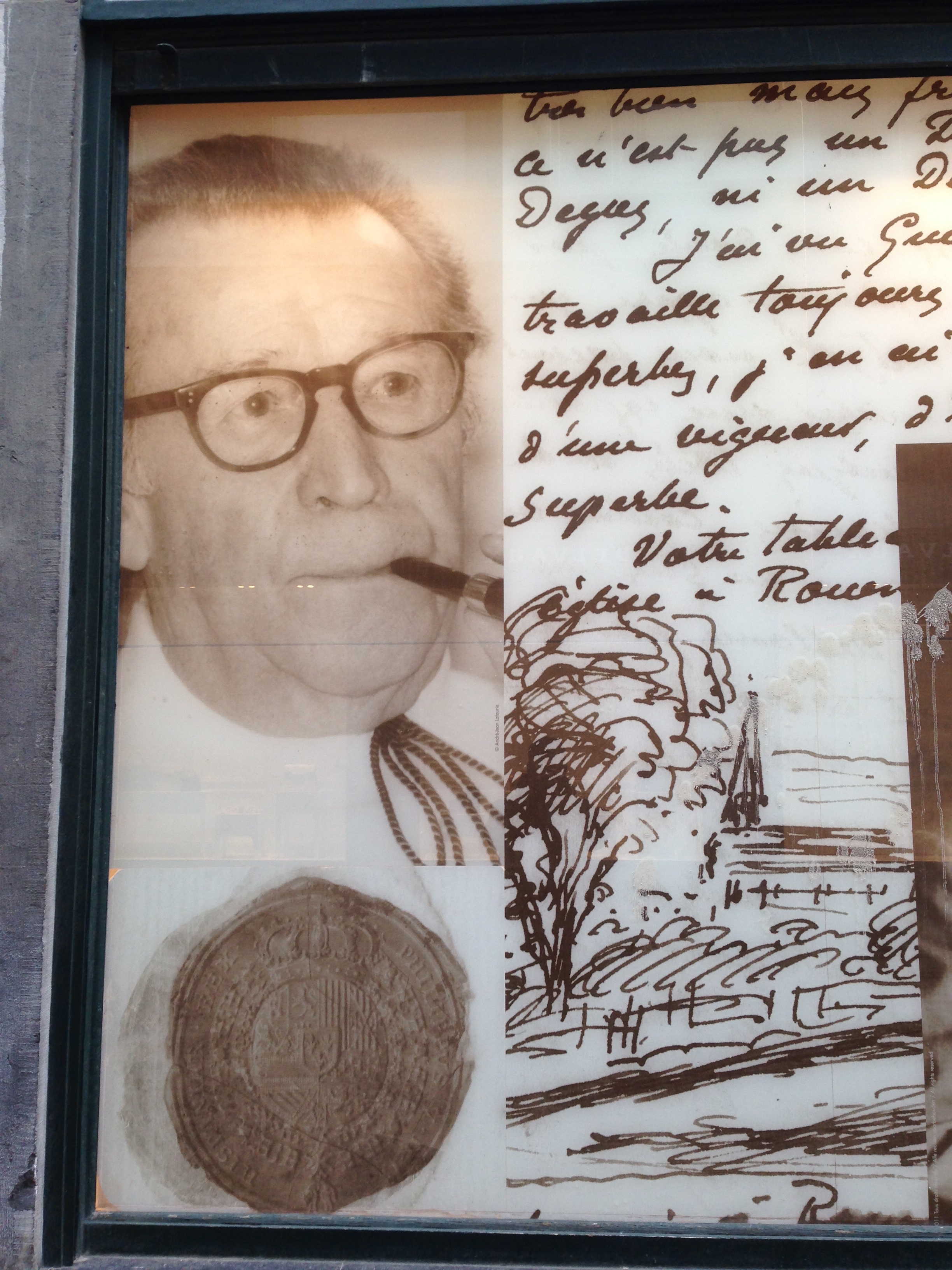
I have to admit being in Brussels once before, as a child in 1970, but I remember next to nothing, which is forgivable because Brussels is for adults, not in the Las Vegas sense, rather for those in search of rich medieval history, vibrant cultural art, high quality jewelry or an incomparable meal. In addition, Belgium counts among its greats Victor Hugo, Georges Simenon (see blog from 7/10/12), Rubens, and Herge (see blog from 9/5/12).

IMG_4560 IMG_4559

French is primarily spoken, but Dutch is ubiquitous as well. I arrive hungry, with a need for traditional fare – onion soup and cheese with local sausage while I enjoy an Inspector Maigret mystery by Belgium’s favorite son, Simenon. For Belgians, like most Europeans, eating out is a lifestyle, and only the worst weather keeps them from the sidewalk tables. This leaves plenty of inside space for me on a chilly day of 0 degrees Centigrade.

IMG_4544

IMG_4542 IMG_4550 IMG_4552

Pheasant Terrine

Posted in Food with tags , , , , on January 6, 2015 by David McInerny

IMG_4503Thanks to my son Alex for being a good shot and providing the fresh, local pheasant for this terrine. Making a terrine requires a few days of patience, but a minimum of actual work. It’s an excellent way to use up extra holiday meat also. It does require a small terrine mold (Staub is a great brand, carried at Williams Sonoma, $19.99).

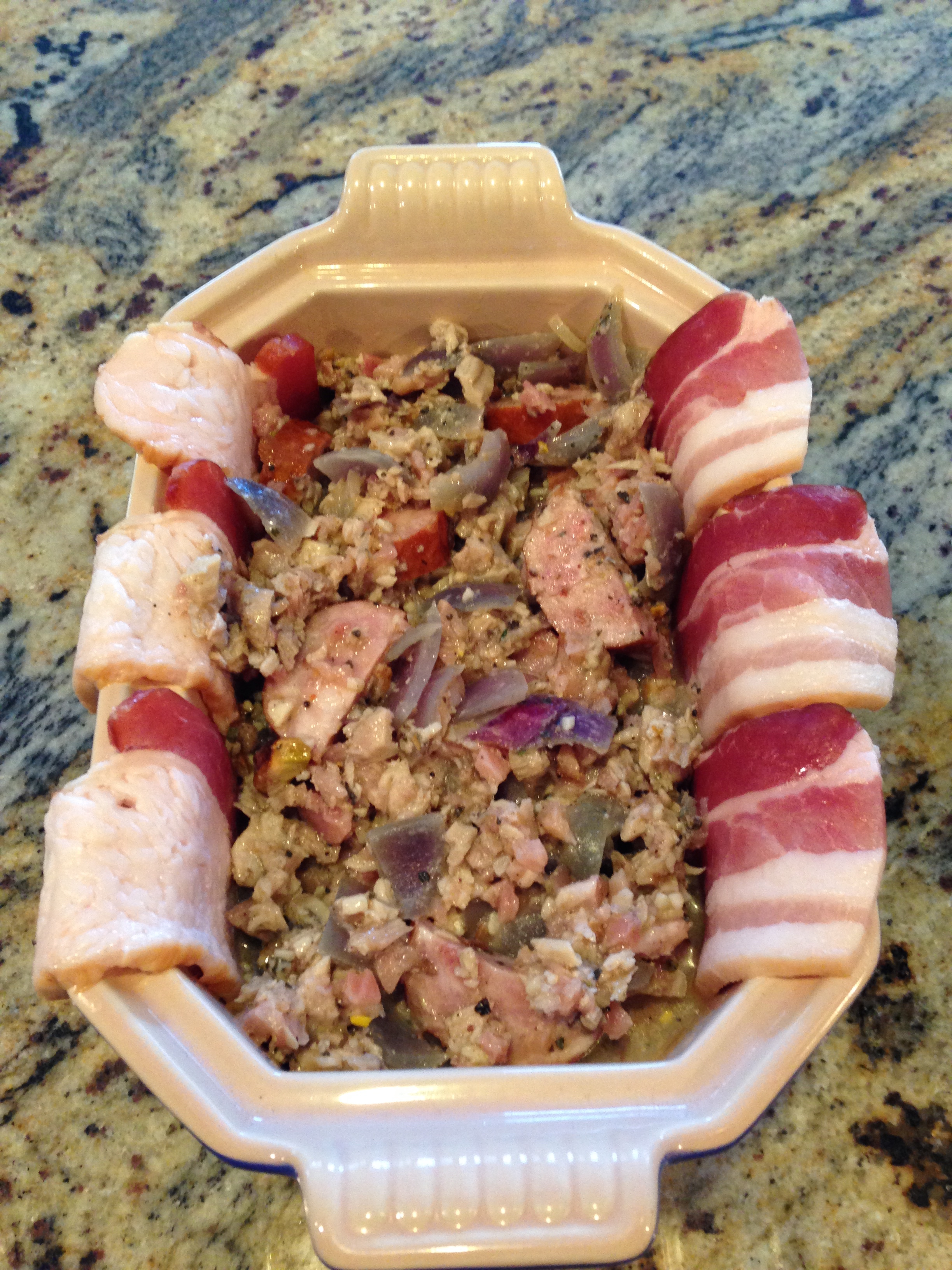
The first step is browning any uncooked meat with chopped onion for flavor, which I did with the pheasant. In addition, I added ham and Polish sausage scraps from our holidays meals, as well as garlic, oregano, some heavy cream, a splash of cognac, pistachios, salt and lots of pepper. Pulse the meat in a blender, add to the remaining ingredients in a covered bowl and let all that good stuff get to know each other overnight in the fridge.

The next day, line the terrine mold with bacon, add the mixture, and cover with more bacon. Bake for 90 minutes at 350 degrees, and then allow to cool 30 minutes on the stove. Remove the lid and place the ceramic plate that comes with the mold onto the cooked loaf, and place two cans of vegetables on top of the plate for about 4-6 hours in the fridge. This will push the fat out and compress the loaf. Once cold, remove the plate and gently scrape off the gelatinized fat. Cover the loaf with foil and refrigerate overnight again to allow the complex flavors to develop.

Serve within three days as a cold, heavy appetizer with crackers and spicy French mustard. Really simple!

IMG_4500IMG_4501

Saucier – Beginning at the Beginning

Posted in Books, Food with tags , , , , , , , on December 27, 2014 by David McInerny

IMG_2603I think I can trace back my desire to get serious about cooking to a single evening. My mom was visiting us in Chicago with her best friend. Her friend was a refined Londoner I had known my whole life, and whose Italian home I had visited any number of times in Perugia, so it was a pleasure to have them stay while they explored the city for a few days. They arrived too exhausted to endure a restaurant, but my mom asked if there was anything easy for them to snack on. Thinking of all the meals these two women had made for me over the years, I felt it was imperative that I whip up something nice for them. My wife wasn’t home yet, so being on my own, I pulled out a paperback copy of the Fanny Farmer Cookbook I used when I occasionally took over the responsibility for making dinner.

I wanted something quick to make, so I chose a simple recipe that has now long been my “go-to” meal-in-ten-minutes specialty: scrambled eggs topped with asparagus tips sautéed in Parmesan butter. They loved it, and Sally, the English expatriate, looked at me and asked me how I had learned to cook like that. That galvanized my desire to learn more about cooking and, admittedly, maybe garner more fabulous praise like Sally’s.

Soon after I arranged a week off from work to take cooking classes from a school in the western Chicago suburbs run by two retired one-star Michelin French chefs. At their recommendation I took the course on making classic French sauces. In retrospect, I should have been paid by these talented but cunning cretins to take these classes. What they didn’t say was they ran a small, eight table bistro in the front of the kitchen, and my other classmate and I were responsible for all the prep to serve dinner for the single seating at 6pm each evening. We arrived a 7am each morning, and before there was any mention of possibly making, let’s say, some French sauces, we sharpened knives, cleaned chickens and rabbits, and chopped mirepoix until our hands shook. Around noon we lunched on remainders of the previous day’s meal, and finally started roasting veal neck bones for stock.

We made oceans of stock, boatloads of demi-glace, and mounds of glace. From there the sauces finally flowed, and each evening around dark, I’d arrive home exhausted but equipped with a quart of the sauce I’d spent the day making over and over until the chefs declared it just right. The neighbors would be waiting in the cul de sac with bread in hand, waiting to dip right in before I barely got out of the car. The desire to please people with food has never left me.

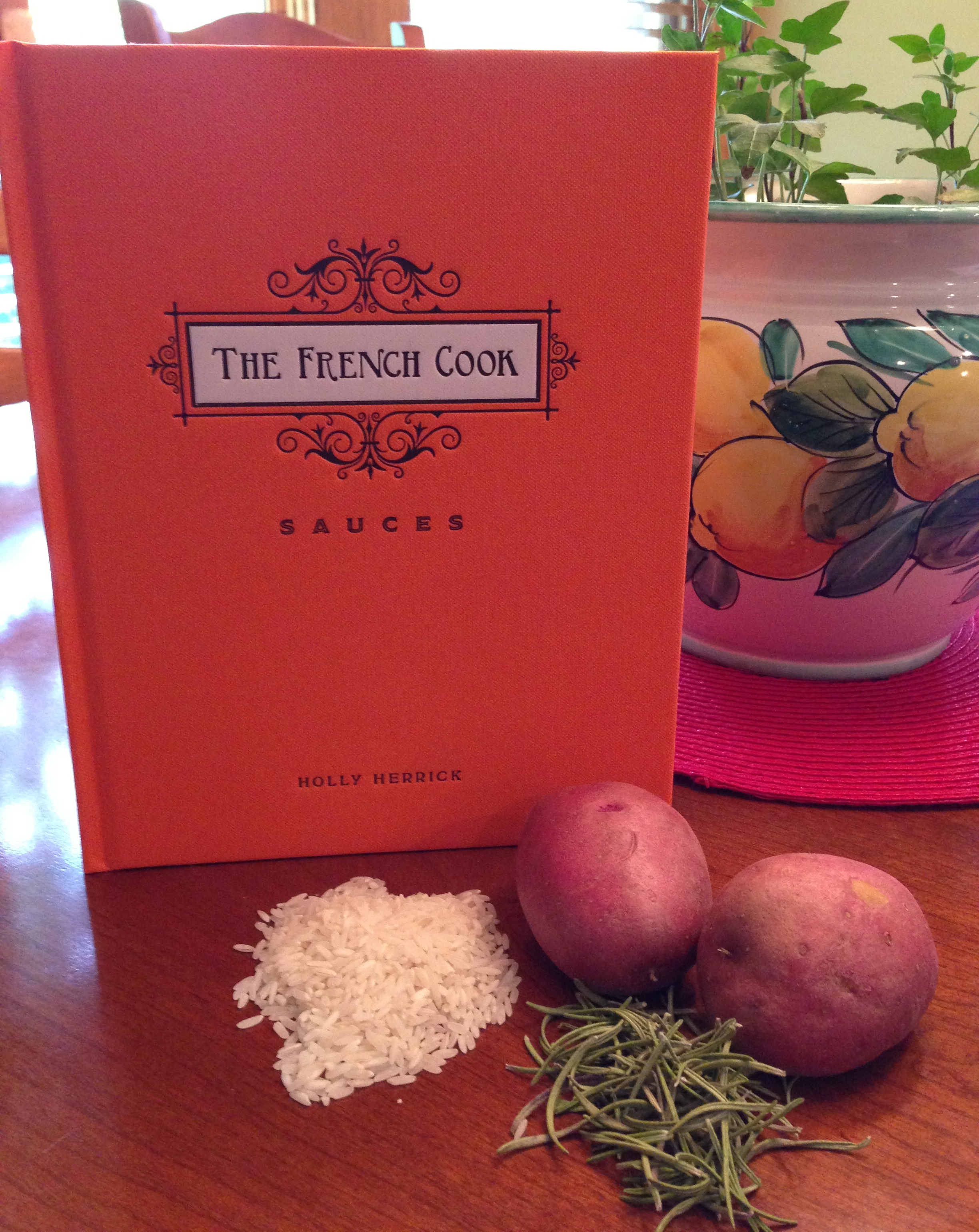
I still use that old copy of Fanny Farmer because it remains the vital guide to overall American cuisine, but I’ve kept my saucier skills sharp with a copy of the Cordon Bleu Cookbook given to me for my birthday that year from one of those grateful neighbors. This year though, I’ve fallen in love with a new sauce book by Holly Herrick. Her Sauces cookbook in The French Cook series (Gibbs Smith Publishing, 2013), is a tidy yet complete volume of all the essentials. Cordon Bleu trained, she presents recipes and techniques that are classic, and the photos (and what good is a cookbook without photos?) are plentiful, large and in full color. I strongly recommend Sauces  for anyone looking to cook well from the start, or to raise their skills a classic notch. As I often tell people who don’t even like to spend time in the kitchen, if you can make a quick and simple Béchamel, you’ve just turned a boiled box of pasta into a French culinary delight. Bon appetit!


Sabatini in Rome

Posted in Family, Food, Travel with tags , , on December 22, 2014 by David McInerny

736041-1I usually wouldn’t find myself wandering an antique mall of my own volition, but I will confess that I don’t fight the opportunity when asked. I especially like the ones where there are booths with absentee owners, where you take your purchase up to a central cashier. The pressure to browse is nonexistent, and I get to imagine what kind of person would spend time and money collecting late Victorian piss pots and then decide other people would want to buy them. (If I’ve just described you, well, I’m sure it’s a fulfilling hobby.) Anyway, I tend to look at the old books on sale, hoping for some pristine gem, but people tend to take better care of old Brady Bunch lunch boxes than first edition Steinbeck’s twice that age.

This is not to say I haven’t made purchases. One of my favorites is a pretty black and white 19th century etching reproduction of the Duomo in Florence, Italy. I had been wondering if I wanted it when I saw the owner had labeled it “A Scene in Paris.” That clinched the deal, and it currently hangs in my office at work.

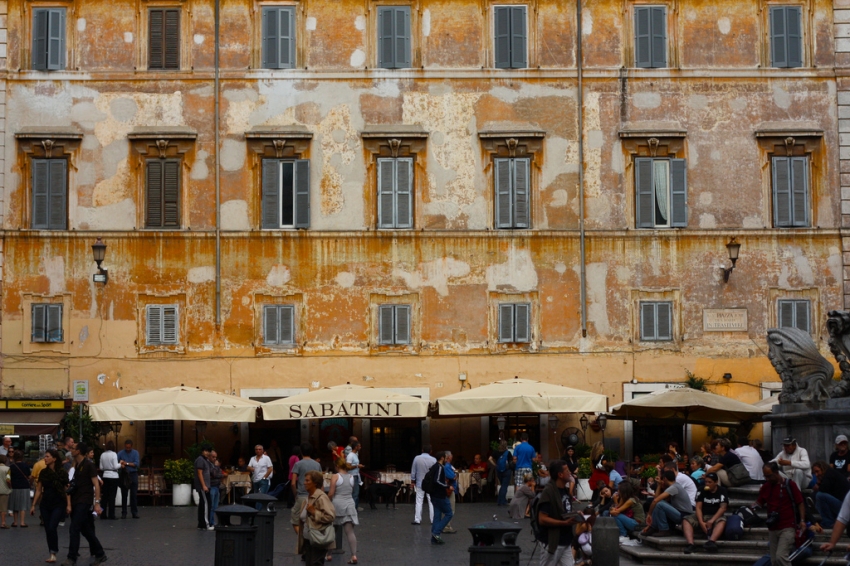
My last find was a wonderfully sentimental one. I spent a few years in Rome growing up, and my parent’s favorite restaurant was Sabatini in the Trastevere section which hugs the Tiber river on the southwestern side of the Eternal City. It’s a cozy refuge from the noise of Rome, filled with family-owned pizzerias and art shops, and with streets too narrow for cars, making it a pedestrian’s dream. There is only space for one small piazza, and on one end of this cobbled idyll resides Sabatini. Whenever we had visitor’s from the States, we always took them there for dinner. On my last visit to Rome, I strolled through Trastevere and Sabatini is still there, vibrant as ever.

In those days, dining and smoking went hand in hand, and many European restaurants placed colorful ceramic glazed ashtrays on the tables with the establishment’s name and address on it. Patrons were welcome to take them home, much in the way we swipe pens from hotels today and unwittingly advertise for them. Sabatini also had elegant terra cotta water pitchers on each table emblazoned with the restaurant’s vital statistics. My mom always loved them, but they must have been for sale, because I don’t remember one ever displayed at home. Or maybe they were too big for her to stuff into her purse when the waiter wasn’t looking.

Regardless, in Prairie Village, KS recently I was walking through an antique mall and looked into a booth with a fair amount of dusty old books. I stepped in and noticed that, being used as a bookend, was a Sabatini water pitcher. I don’t remember what is cost, but it wasn’t much. I would have paid anything within a country mile of reasonable for it. I keep it in my own bookcase now. It’s just a simple, mass produced hunk of ceramic, but I can’t look at it without remembering how much my mom looked forward to an evening at Sabatini. I guess that’s the whole allure of rummaging through an antique mall. You just never know…

IMG_4449


Istanbul – East Meets West

Posted in Food, Travel with tags , , , , , , , , , , , , , , , on September 14, 2014 by David McInerny

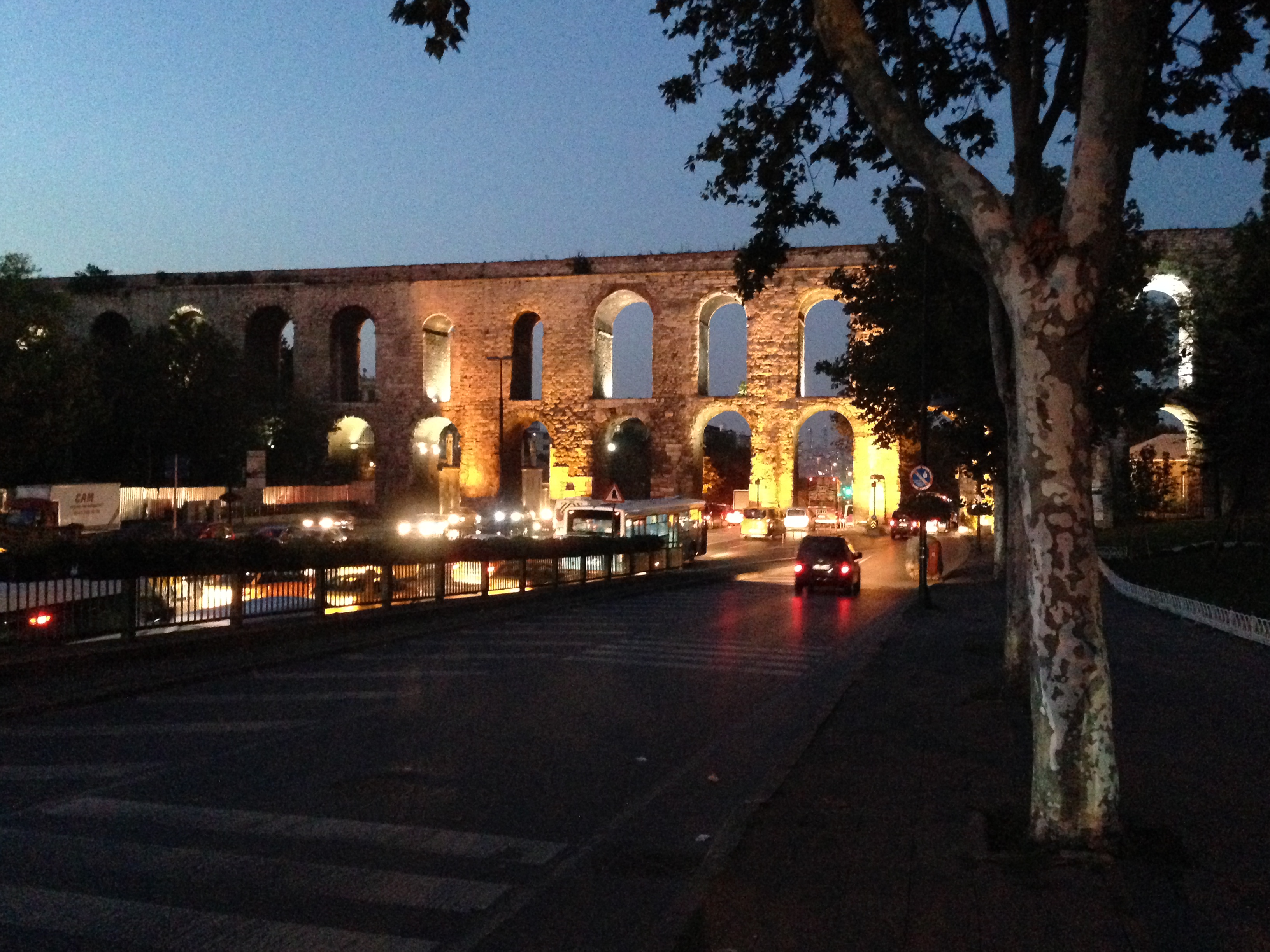
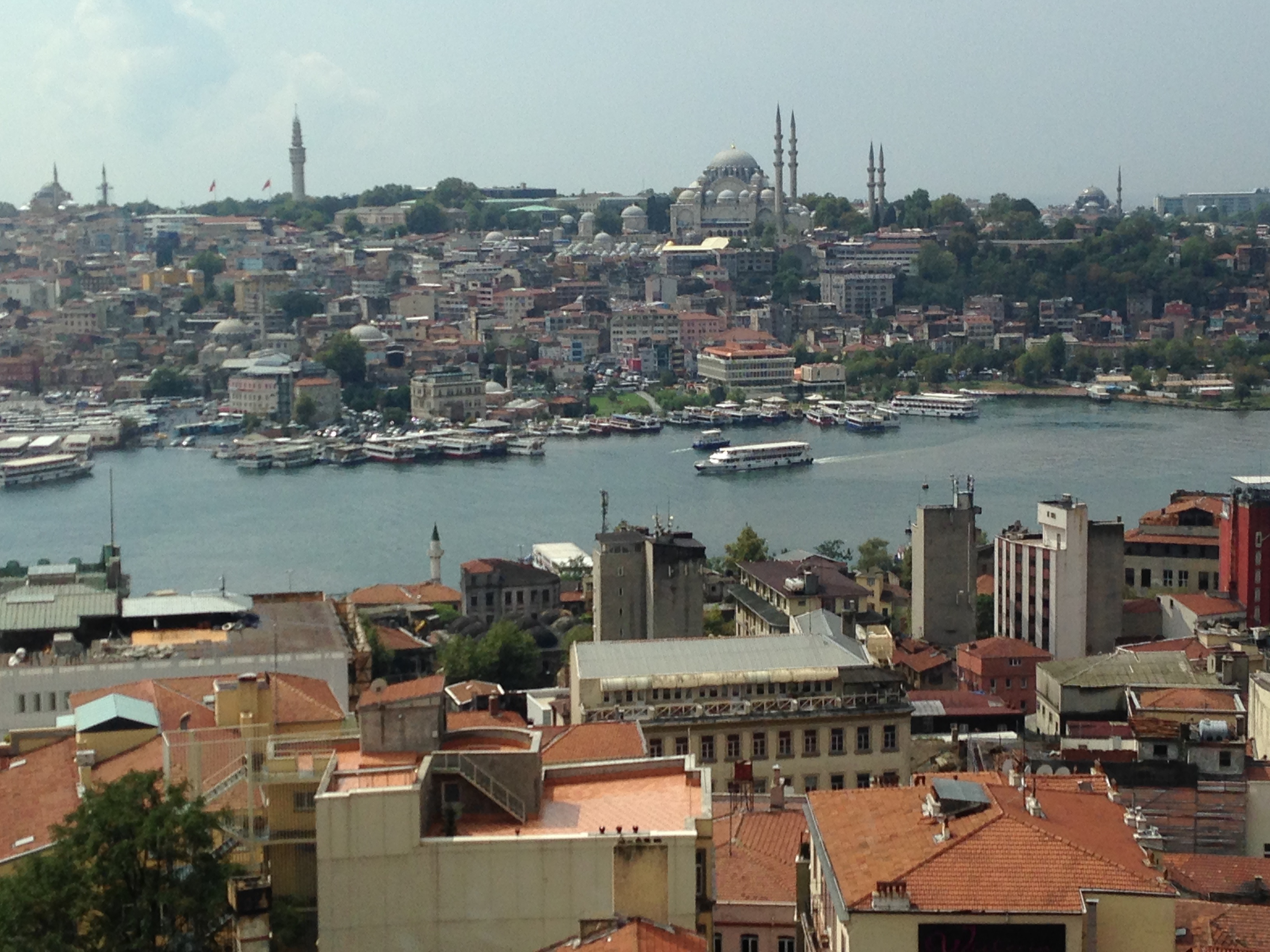
IMG_4183Byzantium, Constantinople, Istanbul – three cultures, one city. Once a Greek outpost named Byzan, the Romans recognized the watery triangulation of the Bosphorus, the Golden Horn and the Sea of Marmara as a vital trade route between Persia and the Mediterranean. They took it from the Greeks, built fortifications for protection, and aqueducts to bring water from the highlands, and renamed it Byzantium.

As the Roman Empire became pressured from within by corruption, and from without by Barbarian hordes, the emperor Constantine concentrated his power to Byzantium and renamed the city after himself. In 300 A.D., after banning the persecution of Christians, he and subsequent eastern emperors started a building spree the world had never seen, and Constantinople became the center of culture for a thousand years while Europe sank into the Dark Ages. IMG_4209 IMG_4224

In the 1400’s the Ottoman’s, after countless attempts, finally took Constantinople, renamed the city Istanbul, and introduced a Muslim culture. So it remains today, with a secular government that retains much that is European – the only city in the world that spans both the continents of Europe and Asia.

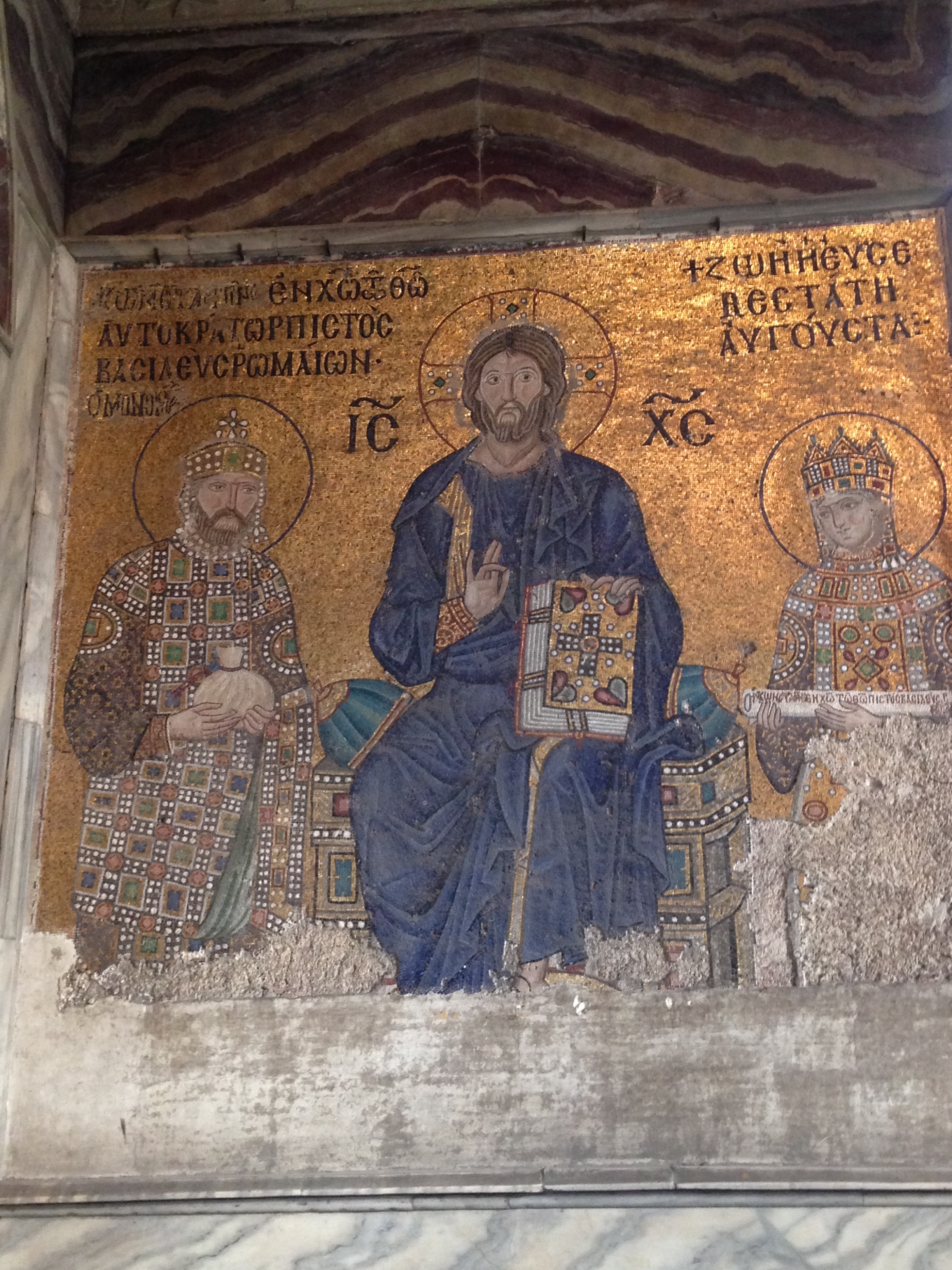
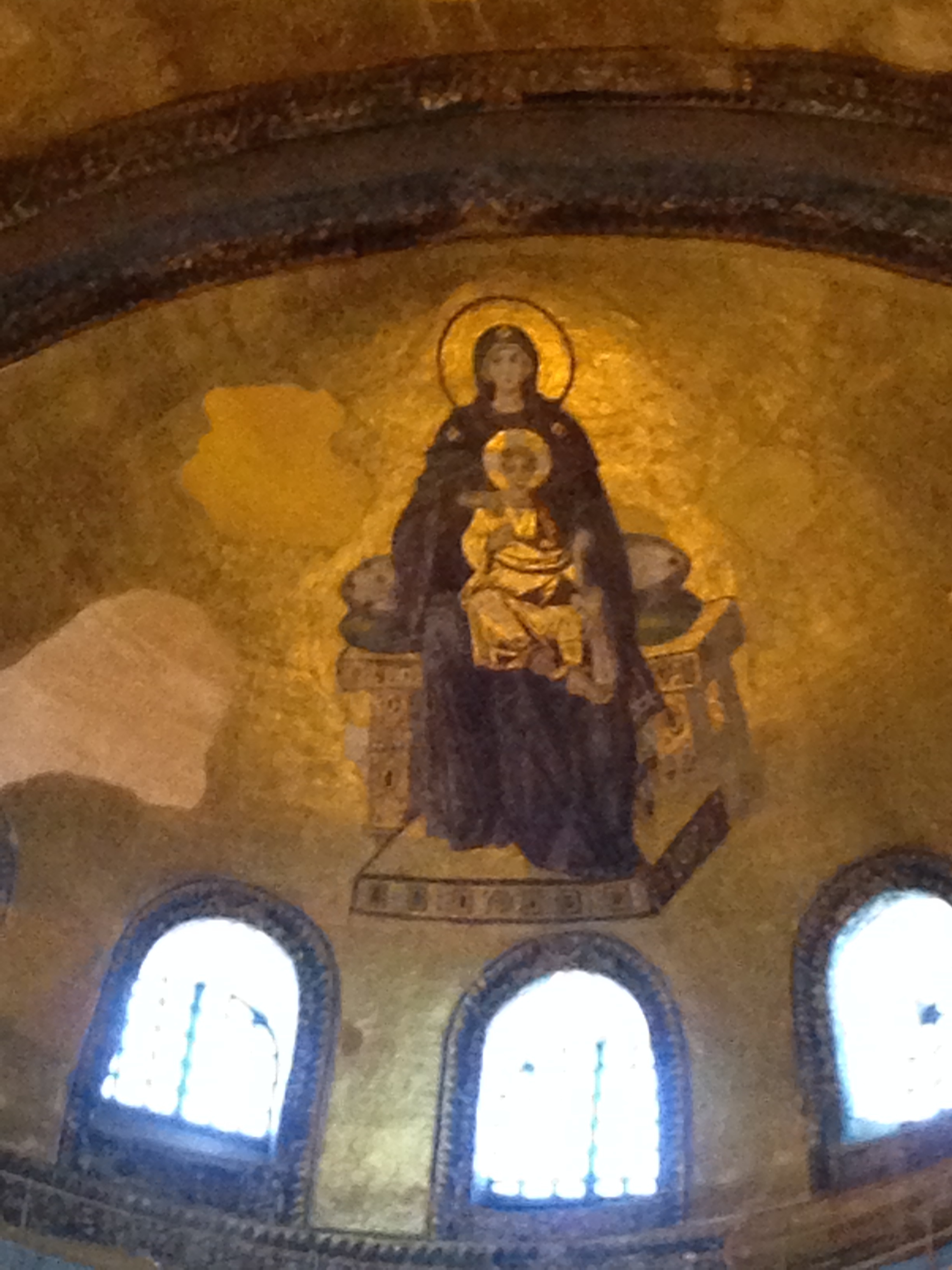
It was in an art class at the University of Innsbruck that I first became interested in Constantinople. The focal point of my interest was a mosaic in the Church of San Vitale in Ravenna, just south of Venice. Emissaries traveling from Rome to Constantinople in the mid-500’s A.D. returned with stories of the epic, heavenly church built by the emperor Justinian, completed in 527. It had a huge, sprawling dome that had never been attempted, let alone achieved (this was a thousand years before the domes of St. Peter’s and the Duomo in Florence). The internal worship space was the largest in Christendom.IMG_4165 IMG_4217

To honor Justinian’s impact on Christianity, a mosaic was made of he and his wife Theodora (no political slouch herself) in San Vitale, a mosaic considered to be the most exquisite of its kind anywhere. It was this work of art that engendered my interest in Justinian’s church that entranced the entire Western world, named Hagia Sophia, the Church of Holy Wisdom. And so, many years later, I finally find myself in the city of Istanbul.IMG_4207 IMG_4202

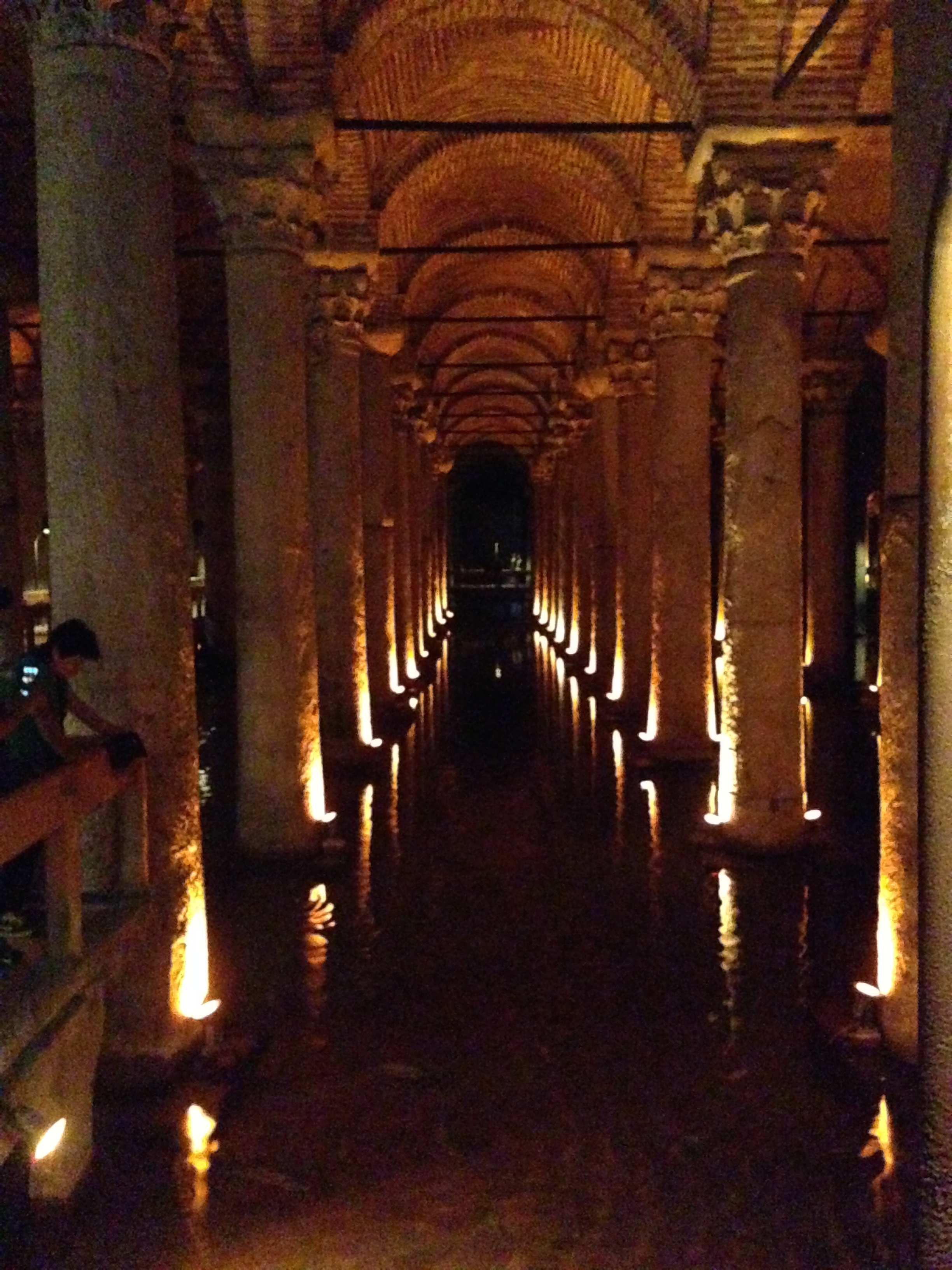
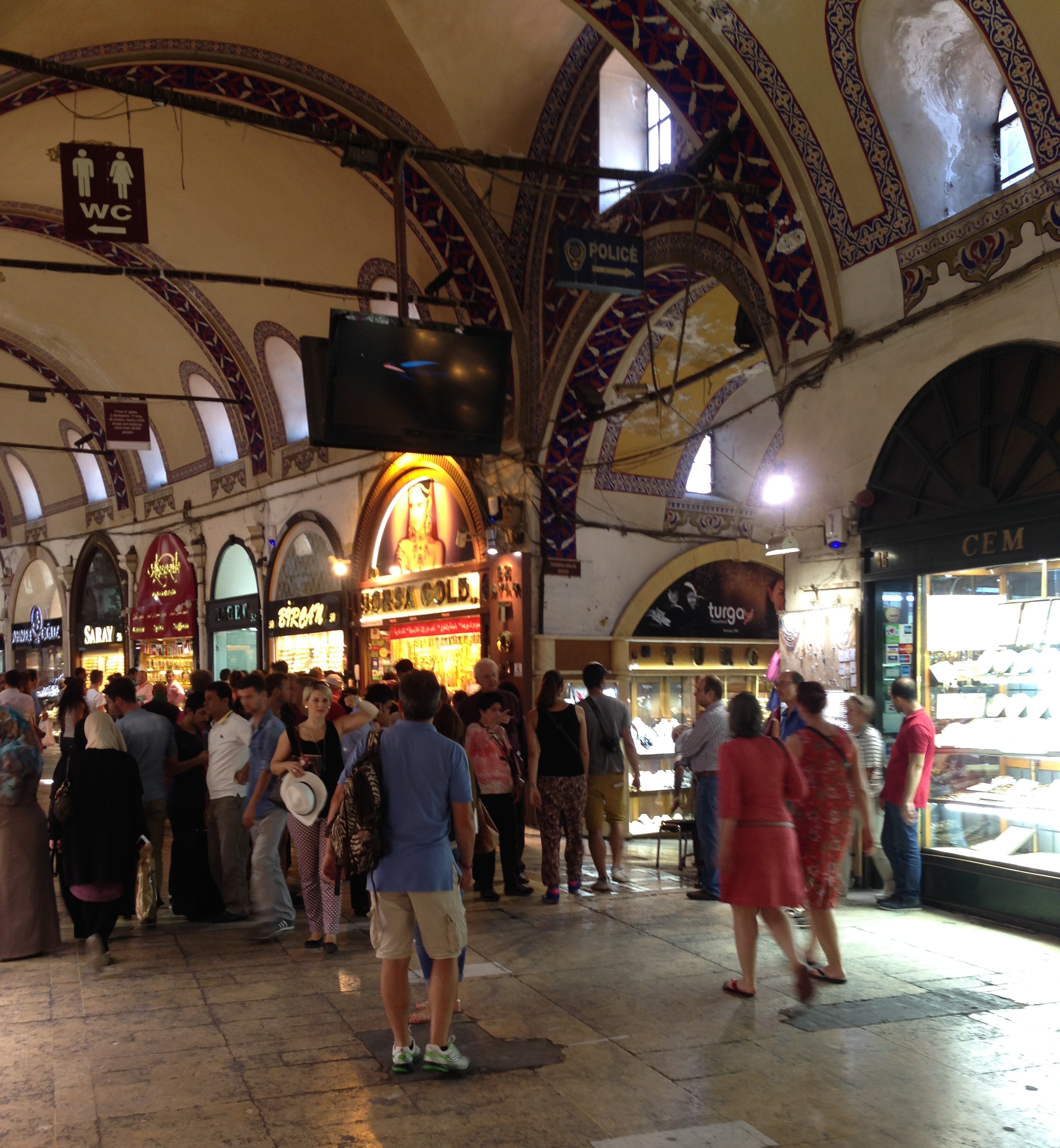
It is a thoroughly modern city, of course, with an old historical city center that draws the tourist dollars, euro, and yen. The tourist season is over, so the crowds are ample but relatively smaller. The days are still warm but the evenings cool, so outdoor dining is ubiquitous. Muslim women clad in black mix with Germans in shorts and rock t-shirts. The locals are remarkably friendly and helpful. Five hundred year old Turkish baths abound. Bosphorus boat tours leave port continuously, and lines for the Blue Mosque, the Galata Tower and Hagia Sophia grow early in the day. The Hippodrome and the ancient aqueducts are surrounded by quaint little restaurants. The Grand Bazaar bustles at all times with hagglers and deal searchers. IMG_4154 IMG_4227

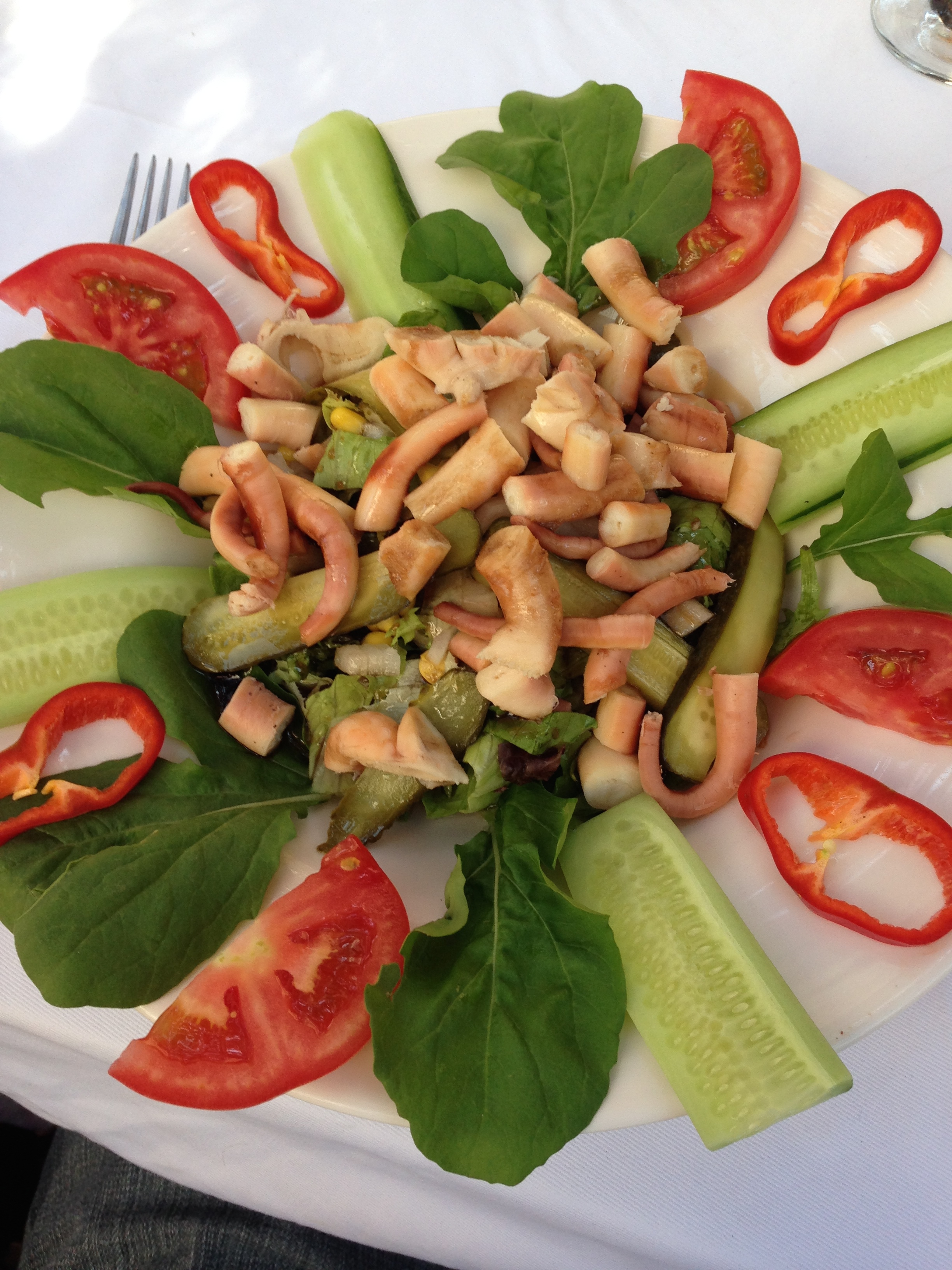
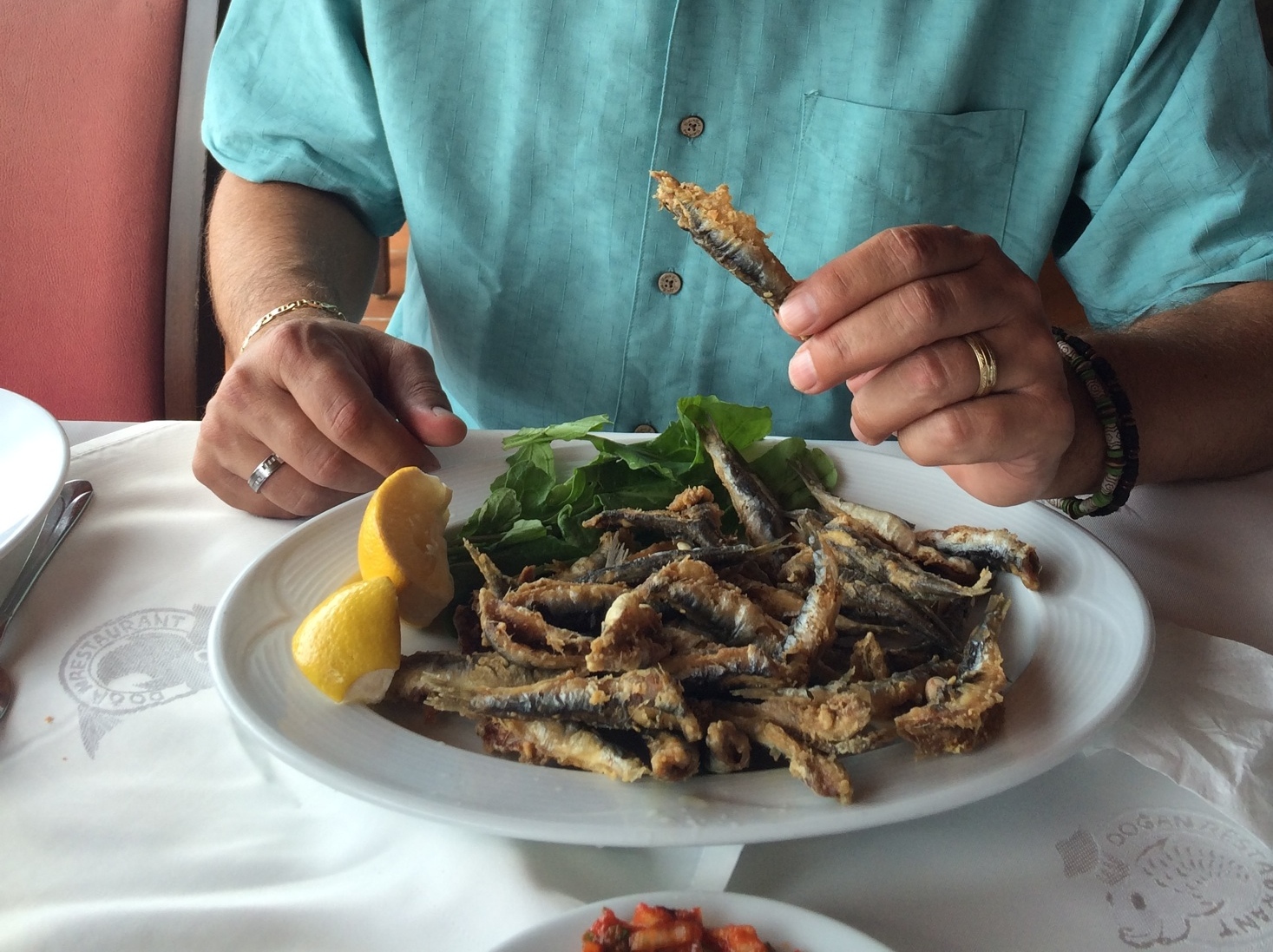
I judge a city by its food, and the food here is fresh, given the Turk’s love of vegetables and it being harvest time. Grilled veggies are the norm – tomatoes, banana peppers, cucumbers. Lamb is ever-available, but the chicken and beef are superb. Meat is served as a “kabop” (kabob) or as a meatball. A dressing of yogurt, sour cream and dill gets slathered over anything on the plate. Seafood is especially good, with fishmongers selling their goods straight from the water to the bistros on the beach. Octopus, sea bass and bream are the most common offerings, and the best seafood is in the Armenian section along the shore of Marmara. The Turkish coffee is delicious and pungent. Restaurants offer a complimentary digestif of tea, brandy or raki when the bill arrives. And of course, a daily hookah after a meal is a most civilized practice.

All in all, it’s a great city to eat in, with historical wanderings to fill the time between café’s and meals. Istanbul delivers as advertised, and I surely hope to return.

IMG_4180 IMG_4218 IMG_4252 IMG_4243