I lived in Rome during the 1969-1970 school year, attending 3rd grade at the Marymount International School. On Sundays my dad would drive us to Santa Susanna’s, which had an English Mass as well as a continental breakfast afterward in an English lending library. It was in the library, while painting my face and dress shirt with jelly doughnuts, that I discovered the Adventures of Tintin.
There are 24 stories written and drawn by Herge (Georges Remi) between 1929 and 1976, which send the boy reporter Tintin and his dog Snowy all over the globe and beyond chasing mysteries and criminal spies. He was a fearless and intrepid youngster, often calling upon his adult friends, Captain Haddock and Professor Calculus, to assist in unraveling sinister plots threatening good citizens everywhere. My favorite adventure was, and is, Destination Moon, which dovetailed with my thrill of watching Neil Armstrong step on the moon on black and white TV just months before. The books were portfolio sized to exhibit Herge’s colorful and talented artwork.
Herge’s stories, while simply boys’ adventures, still ran into censorship over the years: first by the Nazi’s who occupied Herge’s native Belgium, and watched him closely to make sure his villains didn’t represent the Gestapo too closely, and later by the police of political correctness that bristled at his caricatures of other ethnic peoples (as if Herge was to step out of the norms of his time and anticipate the sensibilities of the late 20th century), though no bigotry existed in his story lines.
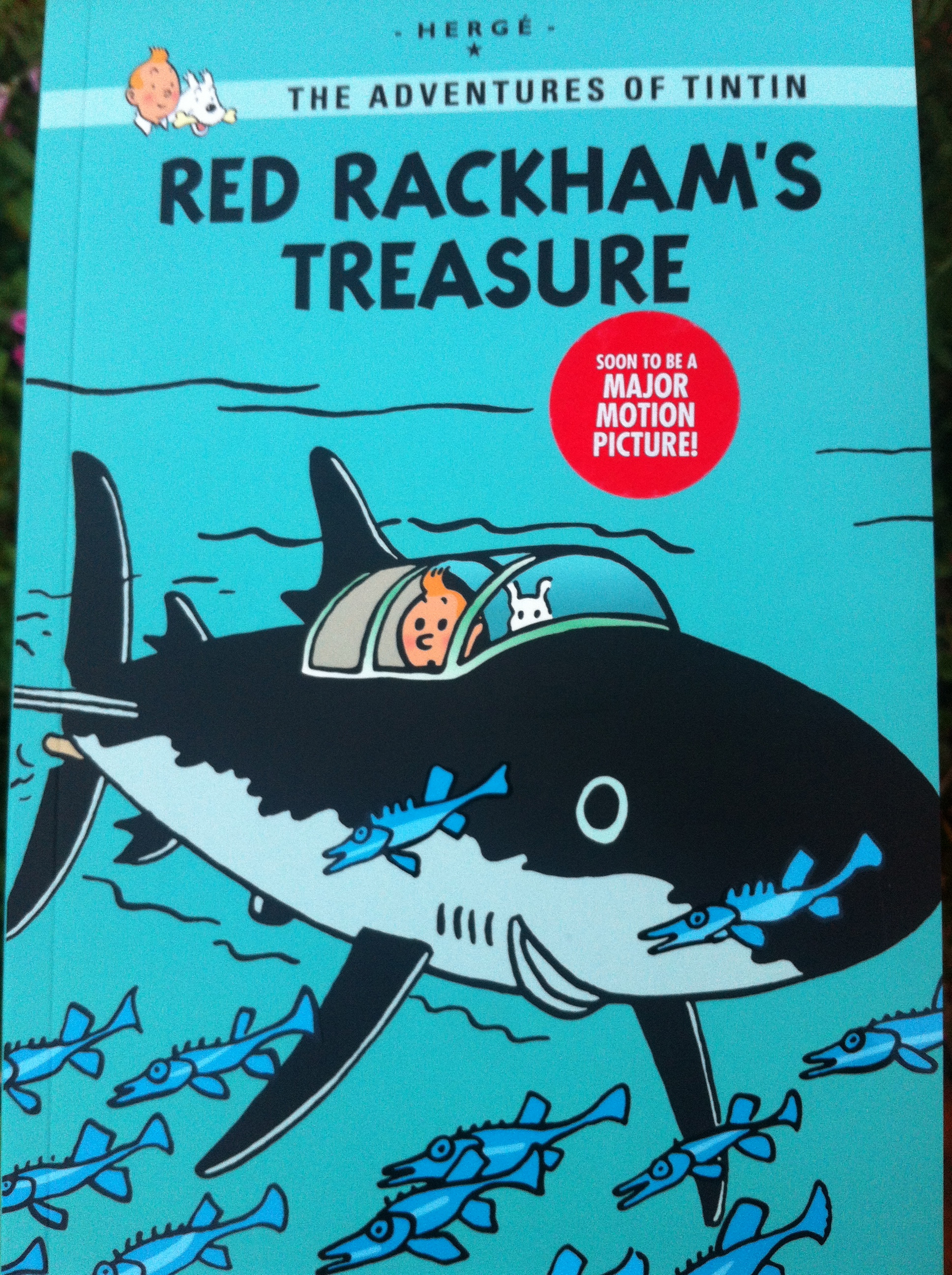
Both of these factors have faded away, and a new motion picture has introduced Tintin to an American audience. Even better, Herge’s publisher, Little, Brown and Company, has released a new edition of the adventures, which I’m enjoying reading all over again, four decades hence.

 berowne.com