Archive for eric clapton

Goethe and Faust

Posted in Books, Music, Travel with tags , , , , , , , on May 28, 2014 by David McInerny

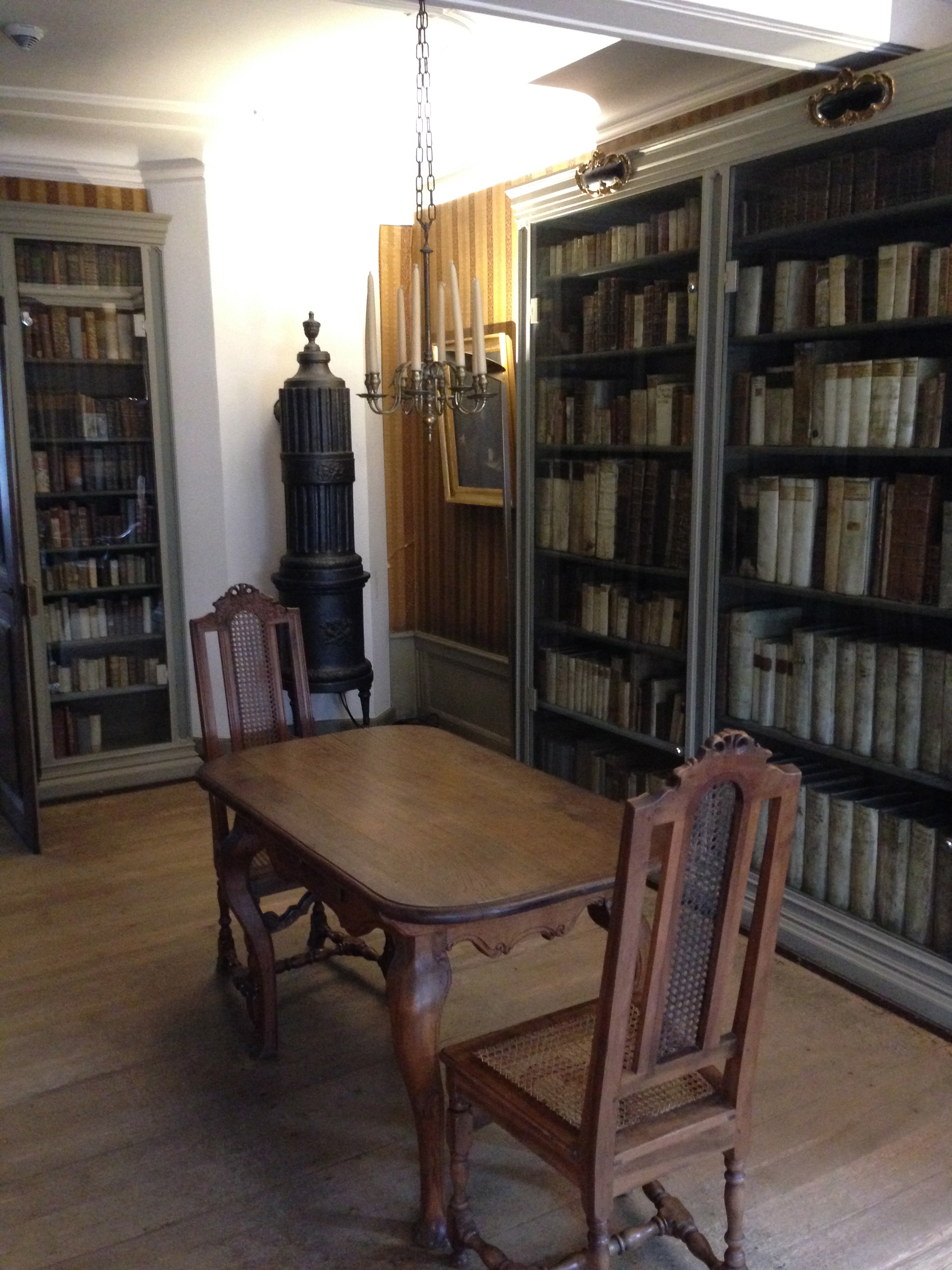
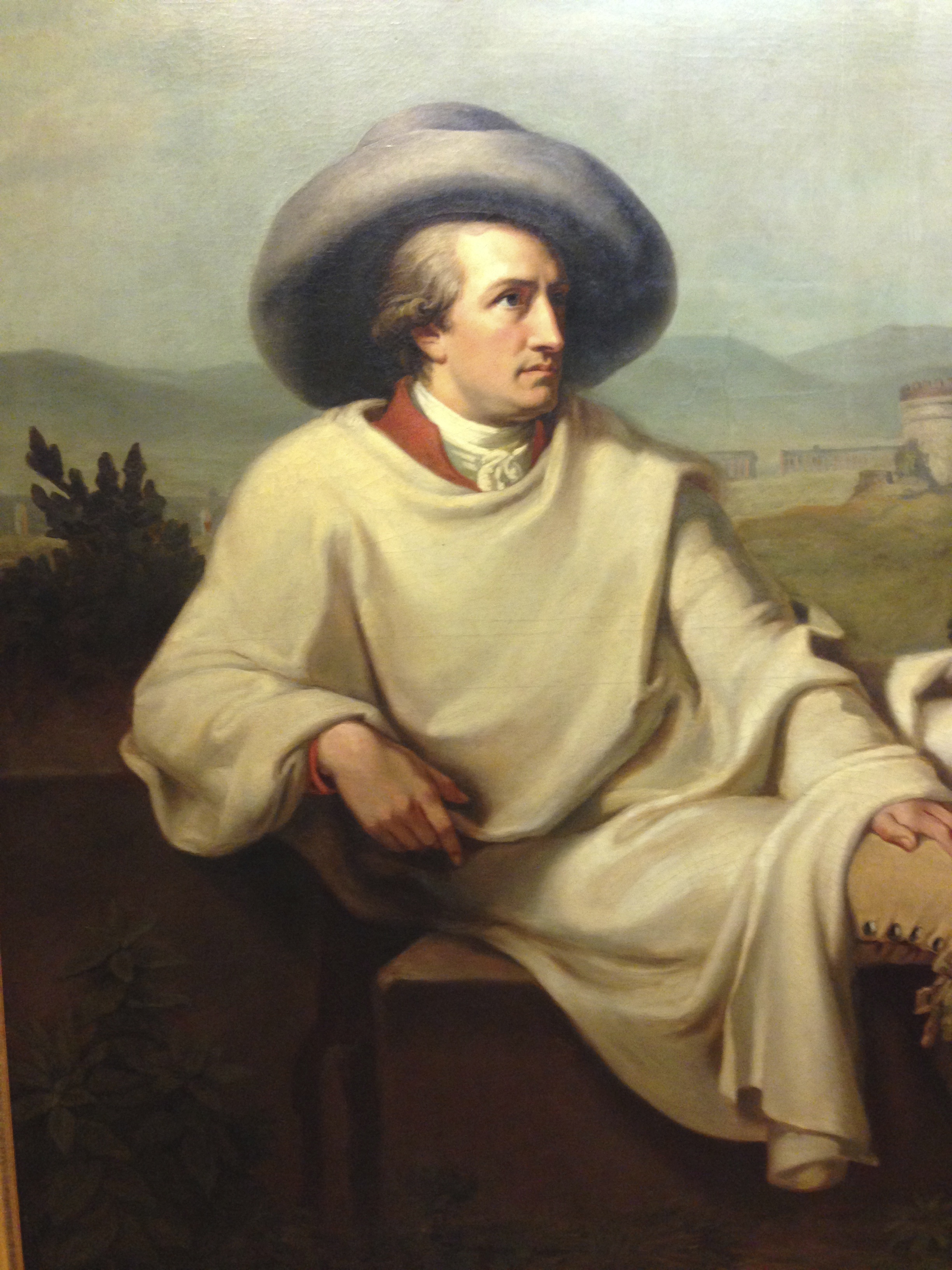
IMG_3226On a recent business trip to Frankfurt, I stumbled across the Goethe Haus und Museum, which brought back sweaty memories of reading his magnum opus in German at Notre Dame. Faust is the original “deal with the devil” tale, with God and Mephistopheles making a bargain for Faust’s soul. Faust, a devout but intellectually striving man, is tempted by Mephistopheles (Satan), and finds himself caught up in sensual pursuits that culminate in sex and murder. Despite his shortcomings, Faust never gives up on his desire to receive God’s grace, and in the end is saved. Act V: “He who strives on and lives to strive/ Can earn redemption still.”

More complex than the American version of the devil’s bargain – bluesman Robert Johnson’s alleged deal at the “crossroads” with Satan in order to play the guitar with extraordinary skill – Faust is the apex of German literature in its universal appeal to the frailty of the human condition. It was, and is, the worthy successor to Dante’s Inferno and, while you may never read either, a visit to Goethe’s home is a worthwhile venture. If you find yourself there, make your way to Florence to see Dante’s home as well!

Additional Music Listening:

Robert Johnson: Cross Road Blues (1936)

Cream: Crossroads (1968)IMG_3224

IMG_3225

Random Fifteen

Posted in Music with tags , , , , , , , , , , , , , , , , on December 28, 2013 by David McInerny

Shuffle. Let the chips fall as they may. Have I ever done this? Over 50,000 songs on the overloaded, overworked hard drive in the basement, connected to an Apple TV upstairs and driven through a Marantz processor and blown through a pair of ENERGY tower speakers.

There, however my control ends. I’ve decided to call up the entire music library this afternoon and press “shuffle.” Will the ensuing tunes represent my musical soul? Or will the closet bands of my misspent youth come forth? It will only be revealed when I push “play.” Here are the chips, fallen as they might…

  1. Plynth (Water Down the Drain) – Jeff Beck Group – Beck-Ola (1969)
  2. The Last Ride – Todd Rundgren – Back to the Bars (1978)
  3. Worried Life Blues – BB King/Eric Clapton – Riding with the King (2000)
  4. Los Angelenos – Billy Joel – Streetlife Serenade (1974)
  5. Holiday – Scorpions – Lovedrive (1979)
  6. I Forgot That Love Existed – Van Morrison – Poetic Champions Compose (1987)
  7. We Are Glass – Gary Numan – Telekon (1980)
  8. The Thrill Of It All – Roxy Music – Country Life (1974)
  9. Violin Concerto in D – Johannes Brahms – Chicago Symphony Orchestra (1993)
  10. There’s A Light That Never Goes Out – Morrissey – Live at Earl’s Court (2005)
  11. Contrapuntcus #14 (incomplete) – J.S. Bach – Art of the Fugue
  12. Cold, Rain and Snow – Ratdog – Live, Chicago (2008)
  13. I Don’t Know – Ozzy Osbourne – Blizzard of Ozz (1980)
  14. The Same Situation – Joni Mitchell – Court and Spark (1974)
  15. 999 – Keith Richards – Main Offender (1992)Image

Duane Allman – Lost Master

Posted in Music with tags , , , , , , , , , , , , on September 2, 2012 by David McInerny

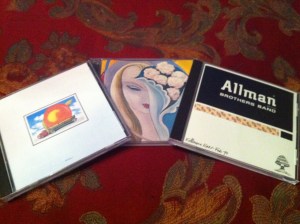
Duane Allman doesn’t have even the small body of “frontman” work that Jimi Hendrix has to shine a light on his virtuousity, but you know his guitar work well from the endless session work he did with sixties hit-makers (Boz Scaggs, Aretha Franklin, Clarence Carter, and Wilson Pickett, for starters), as well as later with Derek and the Dominos and, of course, the Allman Brothers Band. He died in 1971, before he had a chance to develop his signature sound, but the straight-up and slide guitar work that remains with us is a pinnacle of soulful, bluesy southern rock.

Prior to the Allman Brothers formation in 1969, Duane and his iconic brother Gregg recorded a collection of tracks in 1968 (released in 1972 as Duane and Gregg Allman). In these early sessions, Duane displays the polished playing honed from years in the studio backing other artists, but the brotherly synergy took his playing in a direction uniquely his own. The album begins with the anti-war folk classic, “Morning Dew,” but mimics Jeff Beck’s more pyrotechnic arrangement from Truth, released the same year. Rod Stewart sang on Beck’s version, but the Allman’s raise the ante, with Duane’s guitar and Gregg’s keyboards and voice driving much more soul into the song, which is more deserving of the subject matter of the lyrics. An early “Melissa” is a gem, as is “Nobody Knows When You’re Down And Out,” which was re-recorded on Eric Clapton’s Derek and the Dominos.

On February 13 and 14, 1970, the Allman Brothers Band headlined with the Grateful Dead at the Fillmore East. The Dead’s sound engineer, (Owsley Stanley, who passed away this year) had a glorious habit of turning on the concert soundboard tape machine whenever the band played, and this accounds for the thousands of Grateful Dead show bootlegs still traded, collected and treasured by Deadheads (with the blessing of the band). Stanley was an Allman Brothers fan, so he recorded their four sets over the two day run as well, whereby the tapes were promptly packed up and forgotten until 1997 when Dick Latvala, the Grateful Dead’s archivist, discovered them and released a seven-song time capsule on the Grateful Dead label that immediately sold out and went out of print. It is an astonishingly work, showing the band already playing well off each other and clearly having fun, and all a year before the run of shows that became the rock classic Live at the Fillmore East.

In late summer of that same 1970, Clapton recruited Duane Allman for his Derek and the Dominos album. I won’t comment much on Duane’s contribution to the effort, other than to say it was nothing less than transformative, and Clapton was stunned by Duane’s expert slide guitar work. I need only refer you to his woeful notes on “Layla” after the change in time signature to spotlight his genius – you already know the notes by heart, even if you didn’t know that beautiful slide was played by Duane Allman.

He died a year later, in the Fall of 1971, in a motorcycle crash. His brother Gregg collected the studio songs that had been recorded thus far with Duane for the next album, as well as a few unreleased songs from the famous 1971 Fillmore East concerts, and in 1972 the Allman Brothers released Eat a Peach (dedicated to a brother).
Ten Great Live Albums

Posted in Music with tags , , , , , , , , , , , , , , , , , , , on August 8, 2012 by David McInerny

This is by no means a “best of” list, but certainly these are live efforts that belong in any discerning music collection!

  1. Lou Reed – Rock & Roll Animal This is my favorite live album, period. Recorded in New York in 1973 after the demise of the Velvet Underground, Lou Reed breathes fierce energy into these tunes that simply didn’t exist when Andy Warhol produced the VU. Steve Hunter is superlative on guitar, and this disc contains the definitive version of “Heroin.”
  2. Eric Clapton – Rainbow Concert The Who’s Pete Townshend brought Clapton out of a two-year hiatus in 1973, assembling a stunning support band for this concert including himself, Steve Winwood, and Ronnie Wood. Clapton sounds happy to play again, and it shows. The setlist is a Cream/Derek & the Dominos greatest hits.
  3. Keith Jarrett – La Scala When Jarrett plays concerts, it is 100% improvisation, and it is stunning. This 1997 jazz album recorded in Milan is headphone candy as well as perfect background music for an elegant dinner.
  4. Bob Seger – Live Bullet After the monster success of Frampton Comes Alive, bands scrambled to release their own DOUBLE LIVE ALBUM. Between 1976 and 1978, innumerable bands released disposable double-live garbage, replete with 15 minute drum solos and album-side-long jams to nowhere. Live Bullet is not one of these. This was first and foremost a live band, and you can hear the fun Seger and crew are having playing. The music is well-played, tight, and superbly recorded and mixed.
  5. The Rolling Stones – Get Yer Ya-Ya’s Out I would have loved to have been in MSG in 1969 when this album was recorded. The Stones have released a lot of very good live albums, but this is the classic among classics. The spot-on setlist includes “Jumpin’ Jack Flash,” “Stray Cat Blues,” “Midnight Rambler,” and “Honkey Tonk Women.” Jagger starts the concert by proclaiming, “I’ve lost the button on me trousers! You wouldn’t want me to lose me trousers now, do you?” Musical chaos commences.
  6. Dave Brubeck – We’re All Together Again for the First Time Gerry Mulligan’s baritone sax joins Paul Desmond’s alto sax to accompany Dave on piano for a 16 minute “Take Five” that is stratospheric.
  7. Traffic – On the Road Two months after playing in Clapton’s Rainbow concert, Steve Winwood took Traffic on the road in 1973, and in Germany recorded their hits-to-date live in a jazz format. The results work magnificently, and this is the most underrated live album of all time.
  8. Rush – Exit … Stage Left How do just three guys make this much music, live? The precision of this 1981 disc is impossible to overstate, and the band chooses a setlist that satisfies the casual fan (“Tom Sawyer”) and the aficionado (“YYZ”).
  9. Stan Getz – Cafe Montmartre Getz passed away shortly after this show was played in 1991, but he was clearly enjoying the response of the Danish crowd, as evidenced by his banter between songs. Stan loved breathing lovely music through his sax, and this is his very best.
  10. Grateful Dead – Live Dead In 1969, the Dead played a “Dark Star/St. Stephen/The Eleven” medley that cast their improv chops in stone. A 40 minute jam that every Deadhead longs to hear played just one more time…