 There is a comfort in visiting German cities in that there is always the reliable Altstadt, or Old City, predictably waiting in the epicenter of town. Simply look for the tallest church spire in the skyline and walk toward it. Soon cars will be diverted away, and the streets will turn cobbled. Then a main square opens up revealing the church, ornate 18th century structures, and the formidable Rathaus, or Town Hall. Frankfurt is no exception.
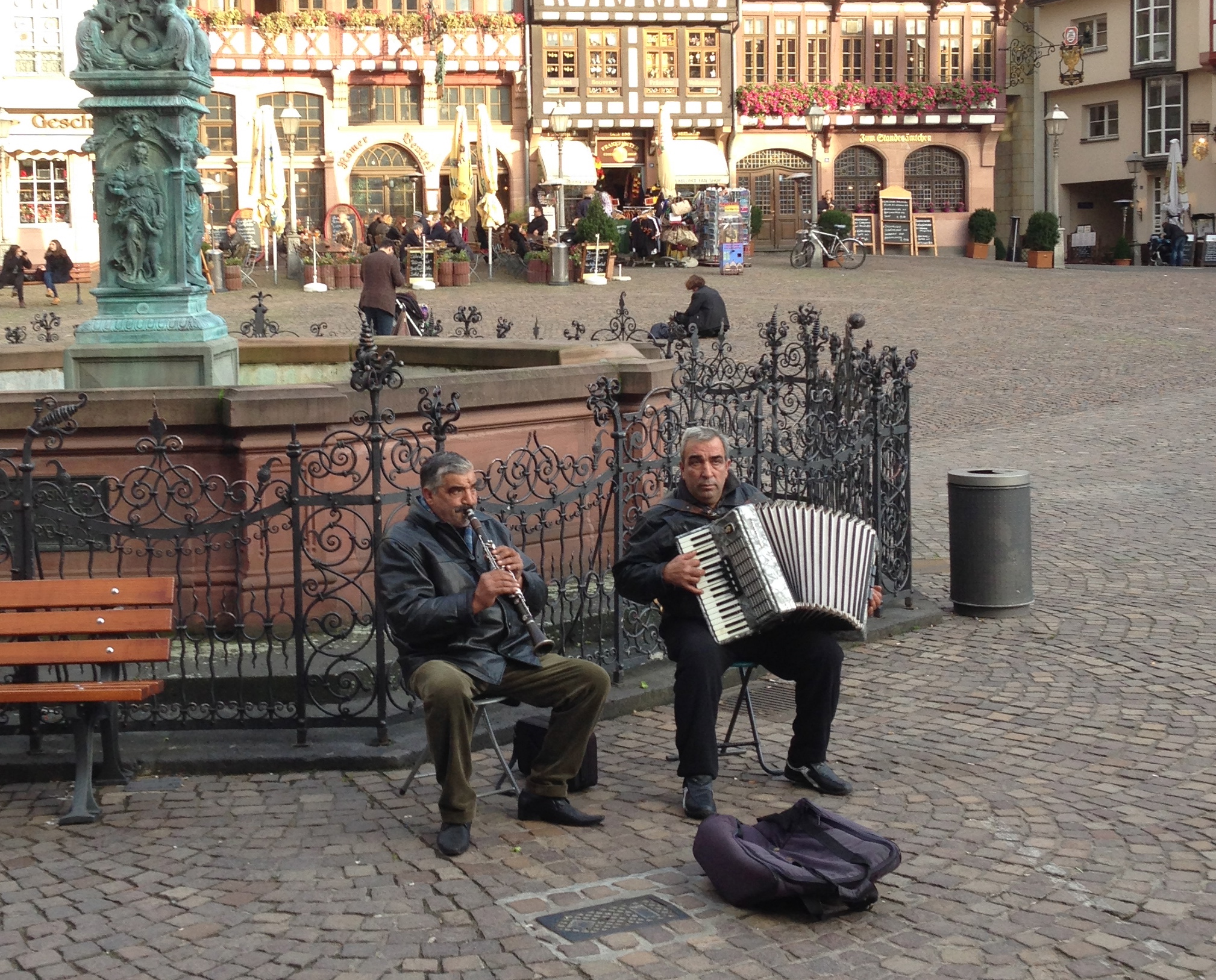
It’s easy to understand why the welcoming feel of the typical German Altstadt has been the inspiration of places as diverse as Epcot and downtown Vail. Impeccably clean and tidy, Frankfurt’s Altstadt is as inviting as any German city, but with more of a sense of coziness than Munich’s or Cologne’s. While, as anywhere, you’ll pay more for a meal for the privilege of location and a view, once situated the tourist is welcomed and his rusty German tolerated, if with mild amusement. Outdoor cafes abound, as do the inimitable German Gasthaus, guesthouse, which is the equivalent of the French bistro. The culinary anchor of Frankfurt’s square is the Schwartzer Stern, or Black Star restaurant, and its prices reflect its reputation. I prefer a seat outside at a cafe, where I can watch an accordionist and clarinetist play soft jazz to the passersby for coins tossed on a blanket.
The Frankfurt Altstadt has the additional benefit of boasting the birthplace of Germany’s literary son, Goethe. Faust, his great tragic play, is still a perennial favorite among Germans and remains on the “great books” list of major Universities. It was a joy to stumble across the house and have a surprise chance to see the excellent museum inside.
Frankfurt is the European hub for many U.S. airlines so, if on the way to Munich, Paris, or Rome you have a layover in Frankfurt lasting more than two hours, the Altstadt here is well worth the ten minute cab ride from the airport.


 berowne.com